2026 Dry-Type Transformer Selection Guide: When Must Copper Windings Be Selected?
Time:2026-08-3 Auther:ZTelec-www.ztelectransformer.com
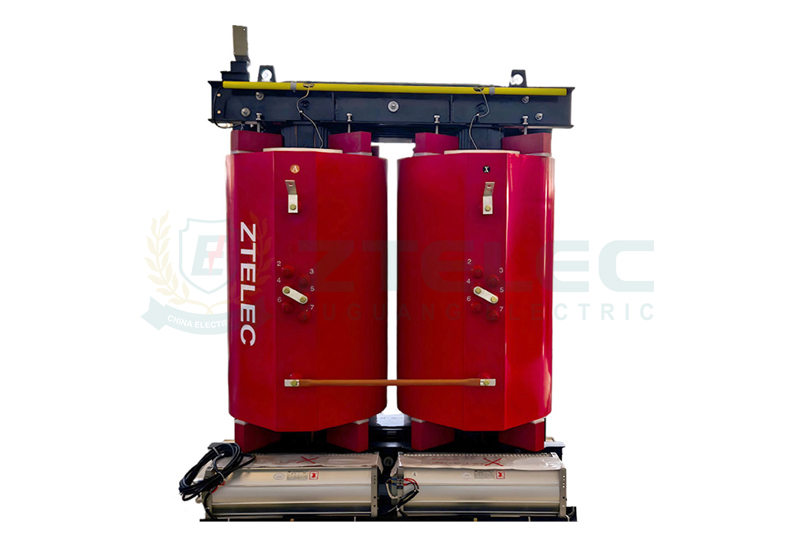
In electrical engineering procurement, selecting between copper and aluminum windings for dry-type transformers has always been a critical decision. Entering 2026, this choice becomes more complex due to global copper price fluctuations, stricter carbon footprint requirements, and the rapid expansion of modern power infrastructure. Choosing the wrong winding material may either increase initial investment unnecessarily or result in higher lifecycle costs caused by increased losses, maintenance issues, or operational failures. This guide analyzes when copper windings must be selected based on technical performance, operational reliability, and real-world application scenarios.

Core Differences Between Aluminum and Copper Windings
Conductivity and Efficiency
Copper conductivity is approximately 1.6 times higher than aluminum. Under the same load current, copper windings produce lower resistance and reduced energy losses. Aluminum windings require a larger cross-sectional area to achieve equivalent performance, which increases winding size and heat accumulation. For high-load applications, copper windings deliver superior efficiency and reduced operating costs.
Thermal Stability and Service Life
Copper has a higher melting point and stronger resistance to thermal fatigue. Aluminum is more susceptible to oxidation and mechanical relaxation during long-term high-temperature operation. As a result, copper winding transformers maintain structural stability and provide a longer service life, especially in continuous heavy-duty environments.
Mechanical Strength and Short-Circuit Resistance
Copper offers higher mechanical strength and improved short-circuit withstand capability. During fault conditions, copper windings are less likely to deform. Aluminum winding transformers require additional reinforcement structures, increasing design complexity while still providing lower reliability under extreme fault currents.
Cost and Equipment Weight
Aluminum windings typically cost 20% to 40% less than copper. They also reduce overall transformer weight, which may simplify installation and transportation. However, copper windings require a higher initial investment but often reduce energy loss and maintenance costs over the transformer lifecycle.

Four Scenarios Where Copper Windings Must Be Selected
High Overload Capacity Requirements
Copper winding transformers provide superior overload capability due to better thermal conductivity and stability. Critical facilities such as data centers, airports, hospitals, rail transit systems, and industrial plants often operate under N-1 redundancy conditions. These applications require transformers capable of sustaining 120% to 130% overload. Aluminum windings experience significant performance degradation under these conditions. Copper’s higher melting point and stronger thermal endurance make it the safer choice for high-load environments.
High Altitude or Extreme Environmental Conditions
At elevations above 2000 meters, air density decreases and cooling performance is reduced. Aluminum winding transformers, due to their larger volume, have limited heat dissipation in such environments. Copper windings are more compact and provide greater temperature rise margins, ensuring stable operation under derating conditions. Copper winding transformers are recommended for mountainous regions, mining operations, and plateau infrastructure projects.
Projects with Strict Space Constraints
Underground substations, offshore platforms, ship electrical systems, and compact urban installations often face limited installation space. For the same rated capacity, copper winding transformers are typically 15% to 20% smaller than aluminum equivalents. Selecting aluminum in designs intended for copper may lead to installation conflicts, busbar alignment issues, or non-compliance with fire safety requirements.
Export Projects and High-End Industrial Applications
Projects exported to North America, Europe, Japan, and South Korea commonly specify copper winding transformers. Semiconductor manufacturing, precision electronics, and high-end industrial facilities also demand maximum reliability. Many international standards and client specifications impose strict requirements on conductor materials. Copper windings reduce operational risks, simplify compliance, and improve acceptance in global markets.

Lifecycle Cost Consideration in 2026
In the 2026 market environment, selecting winding material should not be based solely on purchase price. A comprehensive lifecycle cost analysis should consider 20-year energy losses, maintenance frequency, reliability requirements, and downtime risks. Although copper windings increase initial investment, they often reduce total cost of ownership through improved efficiency and durability.
There is no universally superior material, only the most suitable solution for each application. Copper winding dry-type transformers are strongly recommended for high-load systems, critical infrastructure, extreme environments, compact installations, and export projects. Aluminum windings remain an option for cost-sensitive applications with stable operating conditions. Evaluating project requirements and lifecycle costs will ensure the optimal transformer selection in 2026.
Contact us for professional guidance, technical consultation, and competitive quotations for copper winding dry-type transformers tailored to your project requirements.