Liquid Immersed Transformers: Types and Applications
Time:2026-11-23 Auther:ZTelec-www.ztelectransformer.com
Liquid immersed transformers are the backbone of electrical grids around the world. They step voltage up for efficient transmission and step it down for safe use in homes, factories and commercial buildings.
This guide explains how oil immersed transformers work, the main types available, where each type is used, and what to check before buying copper oil filled transformers for your project.

What Is a Liquid Immersed Transformer?
Basic Definition
A liquid immersed transformer has its core and windings submerged in an insulating liquid inside a sealed steel tank. The liquid does two jobs at once. It insulates the live parts and carries heat away from them.
Common Insulating Liquids
Mineral oil is the most widely used liquid, which is why these units are often called oil immersed transformers or oil filled transformers. Other options include synthetic ester, natural ester and silicone fluids.
Ester fluids have a higher fire point and are biodegradable. They are often chosen for indoor installations and environmentally sensitive sites.
How Heat Is Removed
Heat from the core and windings warms the liquid. The warm liquid rises, flows through radiators or cooling fins, releases heat to the air, and then returns to the bottom of the tank. This natural circulation is simple, quiet and reliable.
Main Components of Oil Immersed Transformers
Core
The core is made of laminated grain-oriented silicon steel or amorphous alloy. It carries the magnetic flux and determines the no-load loss of the transformer.
Windings
Windings are made from copper or aluminum conductors. Copper oil filled transformers use copper windings, which offer lower resistance, better mechanical strength under short circuit and a longer service record.
Tank and Radiators
The tank holds the active part and the liquid. Radiators or corrugated fins increase the cooling surface. Quality welding and coating protect the tank against leaks and corrosion.
Bushings and Tap Changer
Bushings connect the windings to external cables or lines. A tap changer adjusts the turns ratio to keep output voltage stable when the supply or load changes.
Protection Accessories
Typical accessories include a thermometer, oil level gauge, pressure relief device and, on larger units, a Buchholz relay. These devices warn operators early and protect the transformer from serious damage.
Types of Liquid Immersed Transformers
Conservator Type Transformers
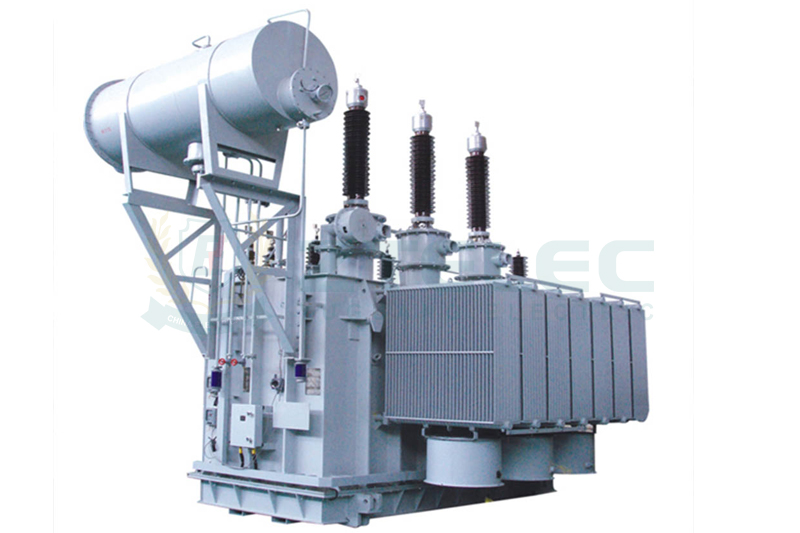
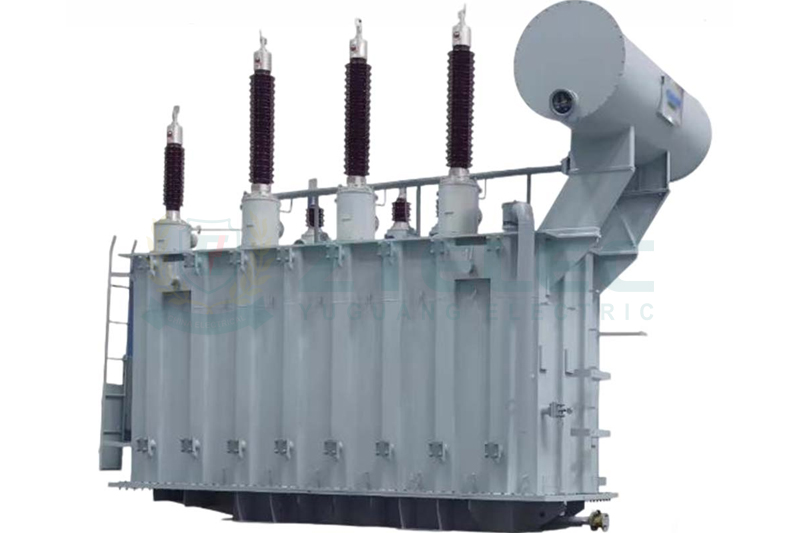
A conservator, or expansion tank, is mounted above the main tank. It allows the liquid to expand and contract with temperature while a breather dries the incoming air.
This design is common in large distribution and power transformers. It is easy to inspect and maintain, but the oil is in contact with air through the breather.
Hermetically Sealed Transformers
A hermetically sealed unit has no conservator. The tank is completely closed, and corrugated walls flex to absorb the oil’s thermal expansion.
Because the oil does not touch outside air, moisture and oxidation are greatly reduced. These units need less maintenance and are popular for distribution networks, solar plants and remote sites.
Pad-Mounted Transformers
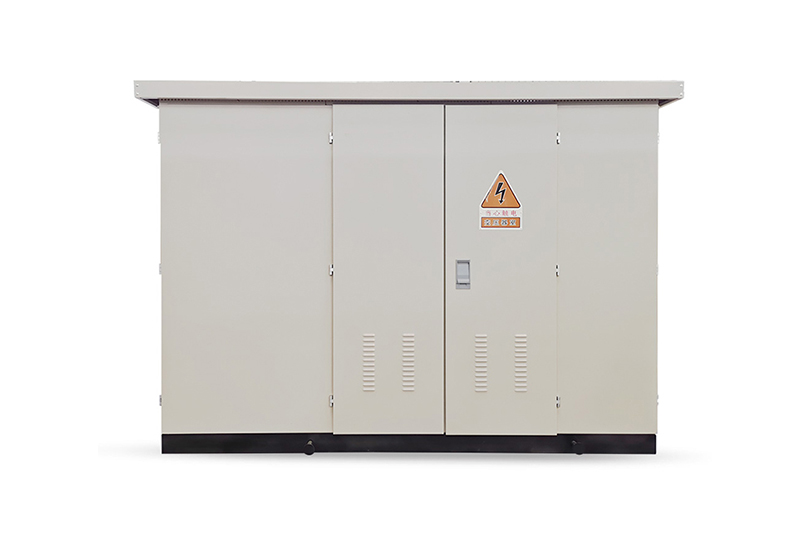
Pad-mounted transformers are installed at ground level inside a locked, tamper-resistant cabinet. They are widely used in underground distribution systems in residential areas, shopping centers and campuses.
Pole-Mounted Transformers
Pole-mounted units are small distribution transformers hung on utility poles. They serve rural areas and overhead networks and are typically rated from 10 kVA to 500 kVA.
Power Transformers
Power transformers are large units used at substations and generation plants. They are rated from several MVA to hundreds of MVA and often use forced cooling and on-load tap changers.
Special Purpose Transformers
This group includes rectifier transformers, furnace transformers, traction transformers and renewable energy step-up transformers. Each is built to handle specific loads, harmonics or duty cycles.
Cooling Methods Explained
ONAN
ONAN means oil natural, air natural. It relies on natural circulation of oil and natural air flow across the radiators. It is the standard choice for most distribution transformers.
ONAF
ONAF adds fans to blow air across the radiators. This increases the cooling capacity, so the same transformer can carry more load for short periods or at higher ambient temperatures.
OFAF and ODAF
These methods use pumps to force oil through the windings, with fans cooling the radiators. They are common on very large power transformers where natural cooling is not enough.
Key Applications of Oil Immersed Transformers
Utility Distribution Networks
Utilities use oil immersed transformers to step medium voltage, such as 11 kV, 22 kV or 33 kV, down to 400 V or 230 V for end users. Their low cost per kVA and long life make them the default choice.
Industrial Plants
Factories, mines, cement plants and steel works rely on oil filled transformers to supply heavy motors and process equipment. These units handle high loads and tough environments well.
Solar and Wind Power
Renewable projects need step-up transformers that connect inverters or turbines to the grid. Hermetically sealed copper oil filled transformers are popular here because they need little maintenance and tolerate variable loads.
Commercial and Residential Developments
Pad-mounted and compact substation designs bring power to housing estates, malls and business parks. They are safe, compact and easy to integrate into landscaped sites.
Oil, Gas and Petrochemical Sites
Offshore platforms and refineries use specially designed transformers with robust enclosures and corrosion protection. Fire-safe ester fluids are sometimes specified.
Infrastructure Projects
Railways, airports, ports and water treatment plants all depend on reliable oil immersed transformers for continuous operation.

Copper Oil Filled Transformers: Why Choose Copper Windings?
Lower Losses
Copper has lower electrical resistance than aluminum. This reduces load loss and heat, which improves efficiency during the whole service life.
Better Short-Circuit Strength
Copper is stronger mechanically. Windings can withstand the high forces caused by short-circuit faults with less risk of deformation.
Compact Size
Because copper carries more current per cross-section, copper oil filled transformers can be slightly smaller and lighter for the same rating.
Reliable Connections
Copper conductors are easier to terminate and less prone to oxidation problems at joints. This helps long-term reliability.
Cost Consideration
Copper units cost more upfront than aluminum ones. For heavily loaded or critical applications, the lower losses and longer life often justify the extra investment. For lightly loaded sites, aluminum may be acceptable.
Liquid Immersed vs Dry Type Transformers
Where Oil Immersed Units Win
Oil filled units usually cost less per kVA, handle higher ratings and voltages, and cope well with outdoor conditions. Their cooling is more effective, so they tolerate overloads better.
Where Dry Type Units Win
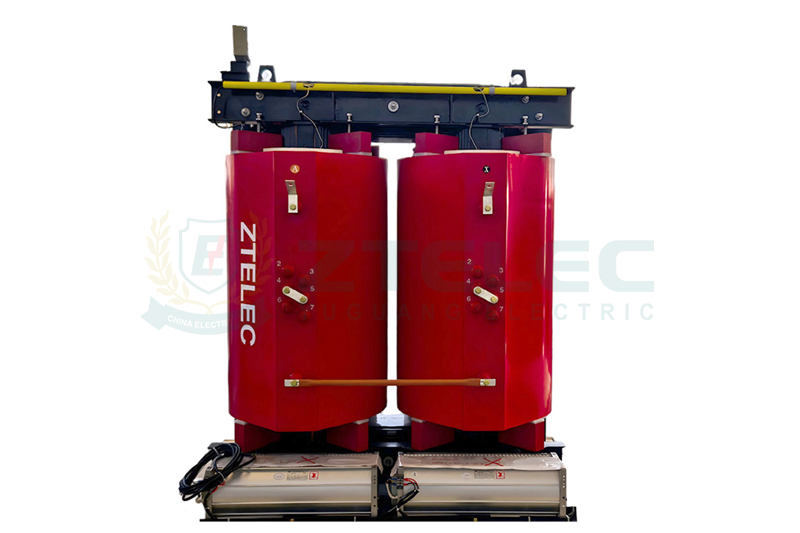
Dry-type transformers have no liquid, so fire risk is lower. They are the preferred choice inside buildings, hospitals and data centers.
Practical Rule
Choose oil immersed transformers for outdoor and utility use. Choose dry type for indoor locations where fire safety rules are strict.
How to Select the Right Liquid Immersed Transformer
Define Capacity and Voltage
Start with the load in kVA, including future growth. Then confirm the primary voltage, secondary voltage, frequency and vector group such as Dyn11.
Choose the Right Design
Pick a hermetically sealed design for low maintenance, or a conservator type for larger units. Select ONAN or ONAF cooling based on load profile and ambient temperature.
Consider Efficiency Level
Look at no-load loss and load loss values. Higher efficiency units cost more at purchase but save energy for decades. Check local regulations such as minimum efficiency requirements.
Check Environmental Conditions
High altitude, extreme heat, humidity, salt air or seismic zones may require special design. Tell the supplier early so the transformer is rated correctly.
Verify Standards and Testing
Confirm compliance with IEC 60076, IEEE C57 or relevant national standards. Ask for routine test reports for every unit and type test reports for the design.
Evaluate the Supplier
Look at factory capacity, quality control, reference projects, warranty terms and after-sales service. Request a factory visit or third-party inspection if the project is large.
Maintenance Tips for Oil Filled Transformers
Regular Inspection
Check oil level, temperature readings, leaks and the condition of bushings and breathers on a regular schedule.
Oil Testing
Dissolved gas analysis and oil quality tests reveal internal problems early. Annual testing is common for important units.
Keep Cooling Surfaces Clean
Dust, vegetation and debris on radiators reduce cooling. Clean them and keep the area around the transformer clear.
Monitor Loading
Avoid long periods of overload. Heat shortens insulation life, so staying within rated loading extends the transformer’s life significantly.
Liquid immersed transformers remain the most economical and proven solution for power distribution and transmission. From pole-mounted units to large power transformers, they serve nearly every sector of the economy.
By understanding the types, cooling methods and benefits of copper oil filled transformers, you can match the right oil immersed transformer to your load, environment and budget. Work with an experienced supplier, insist on proper testing, and compare total lifetime cost rather than the purchase price alone.
Frequently Asked Questions
How long do oil immersed transformers last?
With proper loading and maintenance, a quality unit can operate for 25 to 40 years.
Is mineral oil safe for transformers?
Mineral oil is a proven insulator and coolant. It is flammable, so fire protection and spill containment should be planned. Ester fluids are an alternative where higher fire safety is needed.
What is the difference between sealed and conservator transformers?
A sealed transformer has no expansion tank and keeps oil isolated from air. A conservator type uses an expansion tank and a breather, which allows easier oil inspection and is common for larger ratings.