Transformer Harmonics & K-Factor: VFD, Rectifier and Data Center Loads
Time:2026-10-26 Auther:ZTelec-www.ztelectransformer.com
Modern facilities are full of electronic loads. Variable frequency drives, rectifiers, UPS systems and server power supplies all draw current in short pulses instead of smooth sine waves. These pulses create harmonics, and harmonics make transformers run hotter than their nameplate suggests.
This guide explains what harmonics are, why they damage transformers, how K-factor is calculated, and how to select the right transformer for VFD, rectifier and data center applications.
What Are Harmonics?
A harmonic is a current or voltage component at a whole-number multiple of the base frequency. On a 50 Hz system, the 5th harmonic is 250 Hz and the 7th is 350 Hz. On a 60 Hz system, they are 300 Hz and 420 Hz.
The transformer sees the sum of the fundamental current and all these harmonic currents. The result is a distorted waveform that carries more heat than a clean sine wave of the same RMS value.
Linear vs Non-Linear Loads
Linear loads such as heaters, incandescent lamps and standard motors draw current in proportion to voltage. Non-linear loads, such as rectifiers and switch-mode power supplies, do not. They are the source of nearly all harmonic problems in modern plants.
Total Harmonic Distortion (THD)
THD measures how much harmonic content is present compared with the fundamental. Current THD (THDi) is the figure that matters for transformer heating. A load with 5 percent THDi is mild, while a load with 30 to 100 percent THDi needs careful transformer selection.
Why Harmonics Overheat Transformers
Harmonic currents increase transformer losses in three main ways.
Higher Eddy Current Losses
Eddy current loss in the windings rises roughly with the square of both current and frequency. A harmonic at the 11th order produces about 121 times the eddy loss per ampere compared with the fundamental. This is the biggest heating effect, and it is the reason K-factor exists.
Stray Losses in Clamps, Tank and Core
High-frequency flux also circulates through structural parts, such as core clamps and the tank wall. These stray losses create hot spots that shorten insulation life, even when the average winding temperature looks acceptable.
Neutral Overload from Triplen Harmonics
Third, ninth and fifteenth harmonics (triplen harmonics) add in the neutral instead of canceling. In a four-wire system with single-phase electronic loads, neutral current can reach or exceed phase current. This overheats neutral conductors and the secondary winding of the transformer.
What Is K-Factor?
K-factor is a number that describes how much a load profile heats a transformer through harmonics. It is a weighted sum of the squares of the harmonic currents, with each one multiplied by the square of its harmonic order.
A pure sine wave load has a K-factor of 1. The more high-order harmonic current the load has, the higher the K-factor. The method is defined in IEEE C57.110, and North American K-rated transformers are tested and labeled to UL 1561 and UL 1562.
Standard K-Ratings
K-rated transformers are normally offered in steps of K-4, K-9, K-13, K-20, K-30, K-40 and K-50. A K-13 transformer is designed to supply a load with a calculated K-factor up to 13 at its full kVA rating without overheating.
A Simple Worked Example
Take a six-pulse rectifier load with these current harmonics, measured as a percentage of the fundamental: 5th at 20 percent, 7th at 14 percent, 11th at 9 percent and 13th at 8 percent.
The K-factor works out to roughly 5, and the THDi is about 27 percent. The next standard rating above 5 is K-9, so a K-9 transformer would be the practical choice. A standard K-1 transformer would need significant derating for this load.
K-Factor vs Derating
There are two ways to handle harmonic loads. You can buy a K-rated transformer built to carry the harmonic heating at full kVA, or you can buy a standard transformer and derate it, which means using only part of its capacity. K-rated designs often cost less than the oversized standard unit you would need for the same load.
Typical Harmonic Loads and Their Behavior
Variable Frequency Drives (VFDs)
A standard six-pulse VFD front end draws strong 5th and 7th harmonics. Without a line reactor or DC choke, THDi can reach 30 to 40 percent or more. Adding a 3 to 5 percent reactor, or using an active front end, lowers distortion considerably.
When several drives share one transformer, harmonics partly cancel only if they are out of phase. Drives of the same type running at the same load tend to add up, so check the real operating profile.
Industrial Rectifiers and Electrolysis Plants
Large rectifiers in electrolysis, aluminum smelting, plating and hydrogen production produce high harmonic current by design. Converter duty transformers for these plants are built to IEC 61378-1 or equivalent standards, with special winding arrangements, higher insulation margin and tight control of stray loss.
Multi-pulse designs are common here. A 12-pulse arrangement removes the 5th and 7th harmonics, leaving the 11th and 13th. An 18-pulse or 24-pulse arrangement removes even more.
Data Centers and Server Rooms
Server power supplies and UPS systems are single-phase or three-phase non-linear loads. Older power supplies produce strong 3rd harmonic current, while modern units with power factor correction have much lower distortion. Even so, UPS rectifiers and large numbers of small loads can still push neutral current high.
Data centers also demand reliability and thermal margin, because transformer failure is costly. Many designers specify K-rated or low-loss transformers with oversized neutrals, and they plan for future load growth.
Other Common Sources
LED lighting, EV chargers, solar and storage inverters, welding equipment and arc furnaces all add distortion. In mixed commercial buildings, many small sources combine into a significant overall level.
Design Features of a K-Rated Transformer
A K-rated transformer is not a standard unit with a different label. It is built differently to handle harmonic heating.
Smaller Conductor Strands and Transposition
Windings use finer parallel conductors, often transposed, to reduce eddy current losses. This lowers the heating caused by high-frequency current.
Oversized Neutral
The neutral is often sized at 200 percent of the phase conductor. This allows it to carry the sum of triplen harmonic currents without overheating.
Lower Flux Density and Better Core Design
A lower flux density in the core reduces core loss and leaves margin for harmonic voltage distortion. Some designs also include electrostatic shields and non-magnetic clamps to limit stray losses and hot spots.
Delta-Star Connection
A delta primary traps triplen harmonics in the winding, which keeps them out of the upstream network. This helps protect other equipment, but it also means the transformer must tolerate the circulating current heating.
Selecting a Transformer for Harmonic Loads
Step 1: Collect Real Load Data
Gather harmonic spectra from the drive or rectifier supplier, or measure existing loads with a power quality analyzer. Estimates based only on load type are rough. Measured data gives much more accurate results.
Step 2: Calculate the K-Factor
Use the harmonic spectrum to calculate K-factor for each load group. Then combine groups using their relative current, and add a margin for future expansion.
Step 3: Choose the Strategy
You can pick a K-rated transformer, an oversized standard unit with derating, a multi-pulse phase-shifting transformer, or a combination with filters. For high-power rectifiers, multi-pulse transformers are often the most economical way to meet harmonic limits.
Step 4: Check the Network Limits
Harmonic limits at the point of common coupling are usually set by IEEE 519 or the local utility. A transformer can handle the heat, but the plant may still exceed limits and need filters or active harmonic compensation.
Step 5: Watch for Resonance
Power factor correction capacitors can resonate with the transformer inductance at a harmonic frequency. This can multiply harmonic current and damage capacitors or the transformer. Use detuned reactors in the capacitor bank when harmonic content is significant.
Cast Resin vs Oil-Immersed for Harmonic Loads
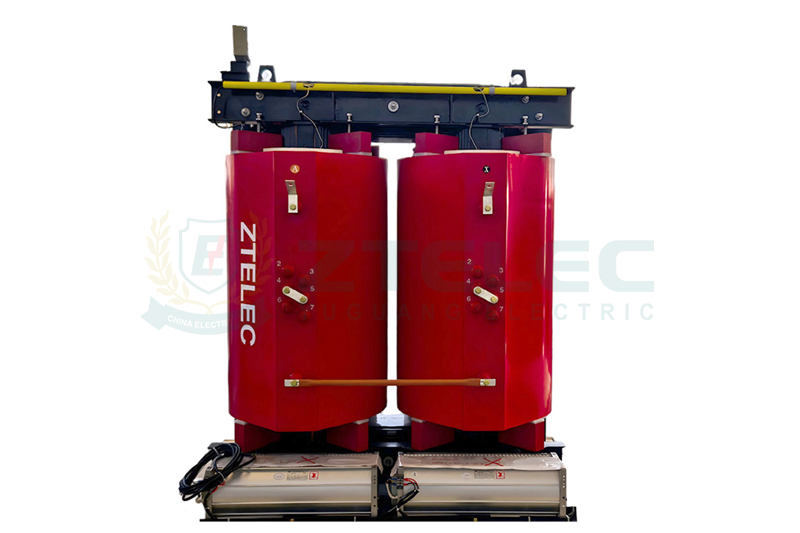
Cast resin dry-type transformers are popular indoors and in data centers because of fire safety. Their thermal mass is lower, so they respond quickly to harmonic heating, and good ventilation is important.
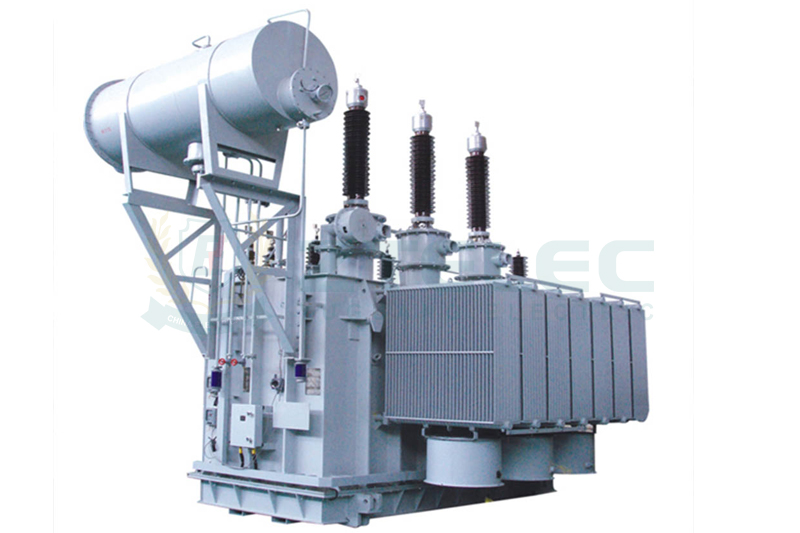
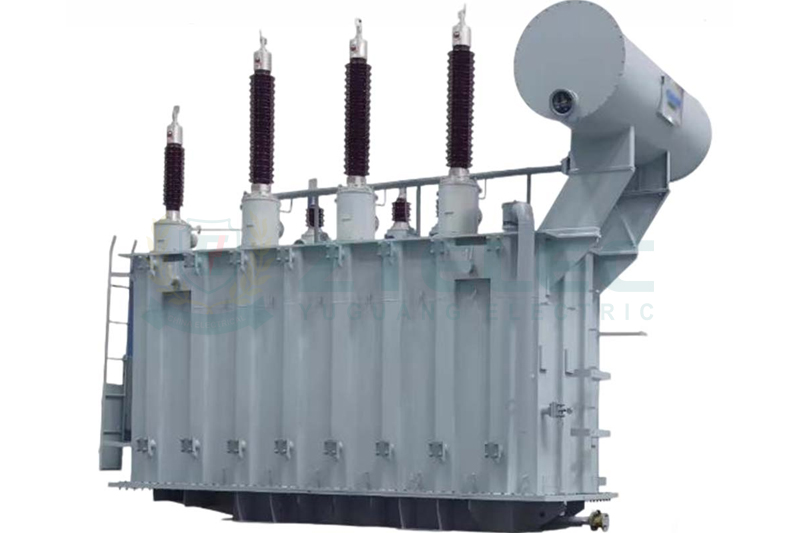
Oil-immersed transformers have better cooling capacity and overload tolerance. They are widely used for rectifier and industrial duty, but need oil monitoring and suitable installation space. Either type can be built to a K-rated or converter specification.
Practical Tips to Reduce Harmonic Problems
Use Line Reactors and Chokes
A reactor in front of a VFD is a low-cost way to cut harmonic current and protect the drive itself.
Separate Sensitive Loads
Feed sensitive equipment from a dedicated transformer, or from an isolation transformer, so that harmonic voltage distortion from heavy loads does not reach it.
Monitor Over Time
Harmonics change as loads are added or replaced. Install power quality meters and review THD and transformer temperature regularly.
Frequently Asked Questions
Do I need a K-rated transformer for every VFD?
Not always. A single small drive with a line reactor may be fine on a standard transformer. Many drives on one transformer, or drives without reactors, are more likely to justify a K-rated unit.
Is K-factor the same as THD?
No. THD shows total distortion, while K-factor weights harmonics by their order to reflect heating. Two loads with the same THD can have very different K-factors.
Can I use a K-rated transformer on a normal load?
Yes. It works well on linear loads too, although it may cost more than a standard unit.
Harmonics from VFDs, rectifiers and data center equipment can overheat a transformer that looks correctly sized on paper. K-factor gives a practical way to measure that risk and to choose between a K-rated unit, a derated standard unit or a multi-pulse design.
Start with real harmonic data, calculate the K-factor, check network limits and plan for growth. If you share your load type, voltage level and harmonic data, our engineering team can recommend a transformer built for your application.