11kV Dry Type Transformer: Sizes, Specs and Selection Guide
Time:2026-11-25 Auther:ZTelec-www.ztelectransformer.com
An 11kV dry type transformer steps medium voltage down to 400V or 415V without any insulating oil. It is a popular choice for buildings, factories, data centers and other indoor sites where fire safety matters. This guide explains the common sizes, the key specifications and how to select the right unit.

What Is an 11kV Dry Type Transformer?
A dry type transformer uses air, not oil, as its cooling medium. The windings and core sit in open air or inside a ventilated enclosure.
The 11kV class covers primary voltages of 10kV, 10.5kV, 11kV and 11.5kV on most nameplates. Secondary voltage is usually 400V, 415V or 433V.
Because there is no oil, there is no leak risk and no oil pit is needed. Maintenance is also simpler than for liquid filled units.
Where a Dry Type Distribution Transformer Fits Best
A dry type distribution transformer is the usual answer when the installation is close to people or valuable equipment. Typical places include:
Commercial buildings: offices, hotels, malls and hospitals.
Industrial plants: factories, workshops and process lines.
Infrastructure: metro stations, tunnels, airports and ports.
Data centers: sites that need clean, low-risk power rooms.
Renewable energy: some wind and solar projects with strict fire rules.
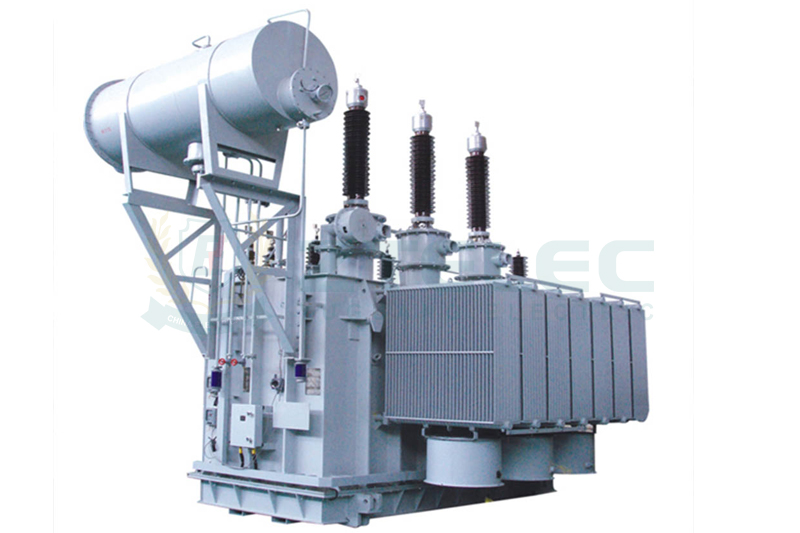
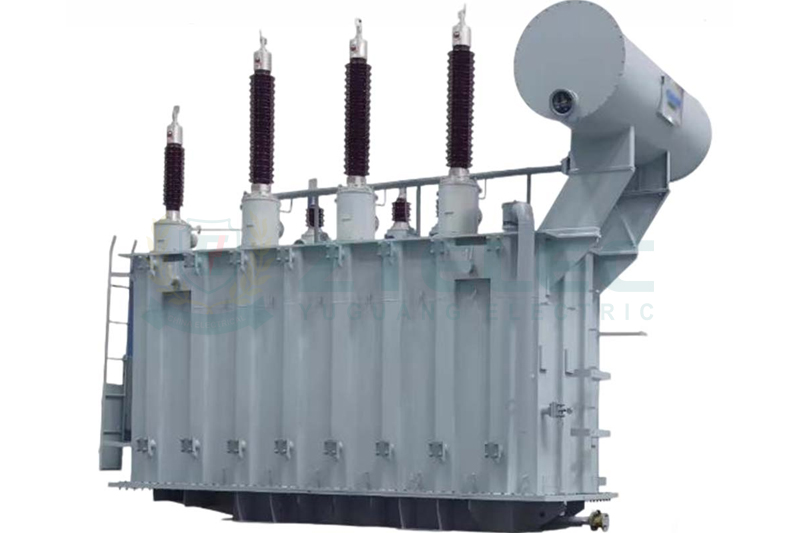
For outdoor substations with high loads and low cost targets, oil immersed units may still be the better choice. Compare both before you decide.
Cast Resin vs Other Dry Type Designs
Not all dry type units are built the same way. The two main types are cast resin and VPI (vacuum pressure impregnated).
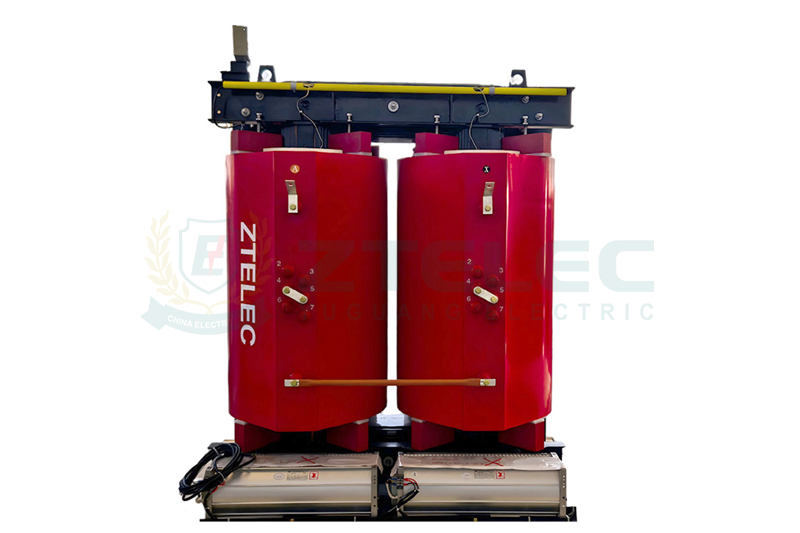
Cast Resin Dry Type Transformer
A cast resin dry type transformer has its windings encapsulated in epoxy resin under vacuum. The resin seals the coil against dust, moisture and chemical vapor.
This gives strong short-circuit strength, low partial discharge and good fire resistance. It is the most common design for 11kV work.
VPI Dry Type Transformer
VPI units use varnish impregnation instead of full casting. They can cost less, but they handle humid and dirty environments less well. For most 11kV projects, cast resin is the safer and more durable option.
Common 11kV Dry Type Transformer Sizes
Standard ratings run from 100 kVA to 3150 kVA. The table below shows typical sizes with their full load currents, which help you size cables and breakers.
| Rated Power (kVA) | Primary Current at 11kV (A) | Secondary Current at 400V (A) | Typical Impedance |
|---|---|---|---|
| 200 | 10.5 | 289 | 4% |
| 400 | 21 | 577 | 4% |
| 630 | 33 | 909 | 4% |
| 800 | 42 | 1155 | 6% |
| 1000 | 52.5 | 1443 | 6% |
| 1600 | 84 | 2309 | 6% |
| 2000 | 105 | 2887 | 6% |
| 2500 | 131 | 3608 | 6% |
Dimensions and weight depend on the design, loss level and enclosure. Always ask the supplier for a drawing of your exact model before you plan the room layout.
Key Specifications to Check
A good specification sheet leaves no room for guesswork. These are the items that matter most.
Voltage and Tap Range
State the primary voltage, secondary voltage and frequency. Most units have off-circuit taps of ±2 × 2.5% on the high voltage side to adjust for grid variation.
Vector Group
Dyn11 is the standard for distribution. The delta primary traps third harmonic currents, and the star secondary gives a neutral for single-phase loads. Some regions prefer Dyn5, so confirm the local rule.
Impedance
Impedance is commonly 4% up to 630 kVA and 6% for larger sizes. It controls fault current and voltage drop. Match it to your protection settings and breaker capacity.
Insulation Level
For the 12kV class, a typical design uses a 28kV power frequency withstand and a 75kV lightning impulse level. Higher levels are available for sites with surge risk.
Insulation Class and Temperature Rise
Most cast resin units use Class F insulation with a 100K temperature rise. Class H allows 125K and gives extra thermal margin. Running well below the limit extends service life.

Cooling Methods and Overload Capacity
Natural air cooling, written as AN, is the default. It is silent, simple and needs no extra parts.
Forced air cooling, written as AF, adds fans under the coils. It can lift the output by about 30% to 40% for short periods. This is useful for peak loads, but fans add noise and need maintenance.
If your load may grow, specify fan-ready temperature monitoring from the start. It is cheaper than a retrofit.
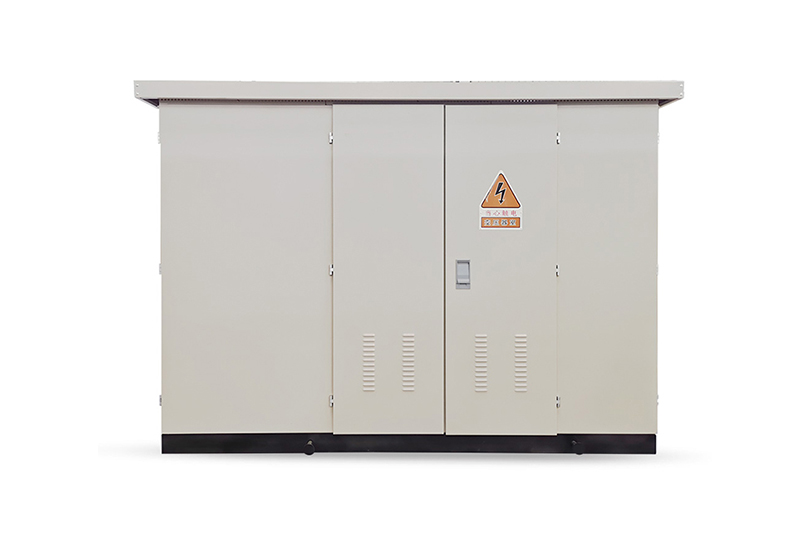
Enclosure and IP Rating
Open coils must be protected from touch and dust. Enclosures are rated by IP code.
IP00: no enclosure, for locked electrical rooms only.
IP20 or IP21: basic indoor protection against touch and dripping water.
IP23: protection against spraying water, for harsher indoor areas.
IP54: stronger dust and splash protection, for demanding sites.
A higher IP rating blocks airflow, so check the temperature rise and derating with the supplier.
Fire, Climate and Environmental Classes
IEC 60076-11 sets three class codes for dry type units. Each one tells you how the transformer behaves in a harsh situation.
E2: approved for condensation and heavy pollution.
C2: approved for low temperature operation and transport down to -25°C.
F1: fire behavior class, meaning the unit is self-extinguishing and emits limited smoke.
Ask for an E2, C2, F1 test certificate when your site is exposed to humidity or has strict fire rules.
Losses and Efficiency
Losses decide the running cost. A dry type unit has two kinds of loss.
No-load loss comes from the core and runs all the time. Load loss comes from the windings and grows with the load. Core material makes a big difference, and amorphous alloy cores can cut no-load loss sharply.
Ask for guaranteed loss values and compare them with your local efficiency standard. A low price with high losses often costs more over ten years.
Noise Level
Noise matters in buildings. Typical sound levels range from about 50 dB(A) to 65 dB(A), depending on size and design.
For hospitals, offices and residential towers, request a low-noise design. Good mounting pads and flexible cable connections also help.
How to Select the Right Size
Follow these steps to pick the correct rating.
Step 1: Add Up the Load
List all connected loads in kW and apply a diversity factor. Convert to kVA using the expected power factor.
Step 2: Leave Growth Margin
Plan for 20% to 30% extra capacity. A transformer that runs between 50% and 80% load usually gives the best balance of efficiency and life.
Step 3: Consider Harmonics
Loads with variable speed drives, UPS systems or LED lighting create harmonics. If they are a large share, choose a higher kVA or a K-factor rated design.
Step 4: Check Site Conditions
Altitude above 1,000 m, ambient temperature above 40°C and poor ventilation all require derating. Tell the supplier early.
Step 5: Decide on One Unit or Two
Two smaller transformers give redundancy and flexible operation. One larger unit costs less and takes less space. Choose based on how critical the load is.
Standard Protection and Accessories
Most 11kV units come with these items, and each one improves safety.
PT100 temperature sensors in the low voltage coils.
Digital temperature controller with alarm, trip and fan control.
Lifting lugs and rollers for moving the unit.
Earthing terminals on the core and frame.
Anti-vibration pads to reduce noise.
For harsh locations, add a winding hot-spot monitor or remote communication.
Installation Tips
Good installation protects both the transformer and your investment.
Provide a dry, clean room with enough airflow. Keep clearance around the unit as the manufacturer recommends. Use a level base that can carry the full weight.
Check cable and busbar connections for correct torque. Before energizing, run insulation resistance and ratio checks. Keep the room free of dust and moisture during operation.
Standards and Testing
Quality is proven by testing. Reputable suppliers follow IEC 60076-11, GB 1094.11 or the local national standard.
Routine tests should cover winding resistance, ratio, vector group, no-load loss, load loss, impedance, applied voltage and induced voltage. Partial discharge testing is especially important for cast resin units.
Type tests, such as temperature rise and lightning impulse, prove the design. Ask for reports that match your exact rating, and consider a witnessed factory test for large orders.
Choosing a Reliable Supplier
Select a manufacturer that can show proof, not only promises.
Look for valid certificates, similar completed projects and a clear warranty. Ask about core steel, conductor material and resin source. Visit the factory or arrange a video audit if you can.
Be careful with very low quotes. They often hide thinner copper, weaker resin or looser loss values.
11kV Dry Type Transformer Selection Checklist
Before you send your inquiry, prepare these details.
Rating: kVA size and number of units.
Voltage: for example 11/0.4kV, with tap range.
Frequency: 50Hz or 60Hz.
Vector group and impedance: for example Dyn11 and 6%.
Cooling: AN or AF.
Insulation class: F or H.
Enclosure: IP rating and material.
Site: altitude, temperature, humidity and indoor or outdoor use.
Standards: IEC, GB or local rules, plus E2, C2, F1 needs.
Get a Quote for Your 11kV Dry Type Transformer
The right 11kV dry type transformer depends on clear load data, the correct specification and a supplier with proven testing. When these three points line up, you get a safe, quiet and efficient power supply for many years.
ZTELEC YUGUANG supplies dry type distribution transformers and cast resin dry type transformers for overseas projects, with custom voltage, capacity, cooling and enclosure options. Send us your voltage, kVA, frequency and site details, and our team will prepare a tailored technical proposal and quotation.