2026 Dry-Type Transformer Specifications, Standards and Selection Guide
Time:2026-04-24 Auther:ZTelec-www.ztelectransformer.com
Dry-type transformers are now one of the most widely used solutions in modern power distribution systems, especially in projects where fire safety, environmental protection, and low maintenance are critical requirements.
Unlike oil-immersed transformers, dry-type transformers use air or solid insulation materials such as epoxy resin instead of insulating oil. This design eliminates oil leakage risks, reduces fire hazards, and improves installation safety in indoor environments.
They are commonly used in commercial buildings, hospitals, metro stations, airports, tunnels, wind farms, solar plants, factories, data centers, and other facilities where reliable and continuous power supply is essential.
In 2026, stricter energy efficiency regulations, carbon reduction targets, and the rapid expansion of high-load facilities such as AI data centers and EV charging infrastructure are driving major upgrades in transformer standards and technical specifications.
For engineers, EPC contractors, and procurement managers, selecting the right dry-type transformer is no longer just about voltage and capacity. Loss values, insulation class, cooling method, harmonic resistance, noise level, and certification compliance all directly affect long-term operating cost and project reliability.
This guide explains the main dry-type transformer specifications, international standards, and practical selection strategies for 2026 projects.

1. Main Types of Dry-Type Transformers
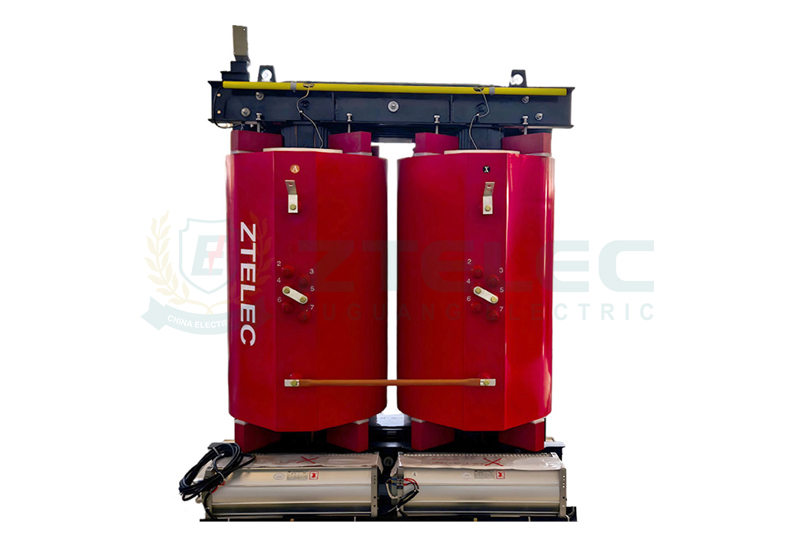
1.1 Cast Resin Dry-Type Transformer (CRT)
Cast resin transformers use vacuum casting technology to fully encapsulate the windings with epoxy resin. This structure provides excellent resistance to moisture, dust, salt mist, and chemical corrosion, while also improving short-circuit strength and mechanical stability.
Because of their strong environmental resistance and high fire safety, cast resin transformers are widely used in hospitals, commercial buildings, subway systems, marine projects, and industrial plants with harsh indoor conditions.
1.2 VPI Transformer (Vacuum Pressure Impregnated)
VPI transformers use vacuum pressure impregnation to coat the windings with insulating varnish. Compared with cast resin transformers, VPI models offer lower manufacturing cost and lighter weight while maintaining good insulation performance.
They are commonly selected for general industrial applications, office buildings, and standard commercial power distribution systems where the environment is relatively clean and dry.
1.3 Open Ventilated Dry-Type Transformer
This is the simplest dry-type transformer structure, relying on natural or forced air circulation for cooling. Since the windings are directly exposed to ambient air, it is mainly suitable for dry, clean indoor environments with low humidity and low dust concentration.
Its lower cost makes it attractive for certain light industrial applications, but protection requirements are higher during installation.
2. Key Technical Specifications in 2026
2.1 Rated Capacity (kVA)
The standard rated capacity range of dry-type transformers usually includes:
10–100 kVA for small commercial facilities, lighting systems, and building auxiliary loads
100–1,000 kVA for factories, office buildings, hotels, shopping malls, and public facilities
1,000–5,000 kVA for hospitals, rail transit systems, data centers, and heavy industrial plants
Above 5,000 kVA for large industrial parks, mining projects, and renewable energy collection stations
In 2026, strong demand from data centers and renewable energy projects has significantly increased the market demand for 630 kVA, 1000 kVA, 1600 kVA, and 2500 kVA dry-type transformers.
2.2 Voltage Rating
Primary Voltage (HV Side): Common voltage levels include 6 kV, 10 kV, 11 kV, 20 kV, and 35 kV depending on regional grid standards.
Secondary Voltage (LV Side): Standard outputs are usually 400 V / 415 V for 50 Hz systems and 480 V for 60 Hz systems.
Tapping Range: Standard off-circuit tapping is usually ±2×2.5%, while some high-end projects require ±5×2% for improved voltage regulation flexibility.
2.3 Insulation Thermal Class
Insulation class determines the transformer’s temperature rise limit, overload capability, and service life.
Class B: 130°C, now gradually phased out in modern projects
Class F: 155°C, the mainstream standard for most dry-type transformers
Class H: 180°C, suitable for high ambient temperature and overload conditions
Class C: Above 220°C, mainly used for special industrial applications
For projects located in tunnels, coastal areas, steel plants, or regions with ambient temperatures above 40°C, Class H insulation is increasingly preferred to improve long-term reliability.
2.4 No-Load Loss and Load Loss
Energy efficiency has become one of the most important purchasing criteria in 2026 because transformer losses directly determine operating cost over the entire service life.
No-load loss (P₀): Core loss generated continuously whenever the transformer is energized, regardless of actual load.
Load loss (Pk): Copper loss generated in the windings under rated current conditions.
For hospitals, data centers, and industrial plants operating 24 hours a day, load loss often becomes the largest long-term cost factor. For standby systems or lightly loaded installations, no-load loss becomes more important.
Total Ownership Cost (TOC): More international tenders now evaluate transformer projects based on full life-cycle operating cost rather than initial purchase price alone.
For a typical 1000 kVA / 10 kV transformer meeting GB/T 10228—2023 Level 2 efficiency requirements:
No-load loss ≤ 1700 W
Load loss ≤ 9500 W
Even a 200 W reduction in no-load loss can generate significant electricity savings over 20 years of operation.
2.5 Short-Circuit Impedance (Uk%)
Short-circuit impedance affects fault current, voltage regulation, and parallel operation performance.
Standard distribution transformers usually use 4%–6% impedance.
Large-capacity systems or transformers operating in parallel often require 6%–8% impedance.
Higher impedance helps reduce short-circuit current and improve system protection coordination, but it also increases voltage drop. Proper balance must be determined according to the overall electrical design.
2.6 Cooling Method and Protection Degree
AN: Natural air cooling
AF: Forced air cooling using fans
ANAF: Automatic switching between natural cooling and forced cooling for energy-saving operation
Protection degree recommendations:
IP00 or IP20 for exposed indoor installation
IP21–IP44 for enclosed indoor transformer rooms
IP44 for humid, dusty, or semi-outdoor environments
IP54 or above for outdoor dry-type transformer applications

3. Major Standards for Dry-Type Transformers in 2026
3.1 China National Standards (GB/T)
GB/T 10228—2023: Defines technical parameters, energy efficiency grades, and loss limits for dry-type transformers
GB 1094.11—2023: Covers temperature rise, insulation performance, and routine testing requirements
GB/T 17211: Loading guide for overload operation and service life evaluation
GB 3836 Series: Special requirements for hazardous and explosion-proof environments
The most important change in 2026 is the full implementation of the new three-level efficiency system under GB/T 10228—2023. Level 1 is the highest efficiency, and most new industrial projects now require at least Level 2 compliance.
3.2 IEC International Standards
IEC 60076-11:2018 is the core international standard for dry-type transformers, covering insulation level, temperature rise tests, partial discharge limits, and short-circuit withstand capability.
IEC 60076-1:2011 defines general transformer design and testing requirements.
IEC 62271-202 applies to prefabricated substations combining dry-type transformers and medium-voltage switchgear.
3.3 EU ErP Directive and Tier 2 Efficiency
Since July 2021, the European Union has enforced EU 2019/1783, commonly known as Tier 2 efficiency requirements. This regulation sets minimum efficiency standards for medium-voltage distribution transformers.
For dry-type transformers exported to Europe, compliance with ErP Tier 2 is not optional—it is the minimum market entry requirement in 2026.
3.4 North American Standards
UL 1562: Safety standard for dry-type transformers
IEEE C57.12.01: General requirements for dry-type distribution transformers
NEMA ST 20: Electrical specifications and rating requirements
4. Key Selection Factors for Engineers in 2026
4.1 Installation Environment
For clean indoor environments such as office buildings and shopping malls, AN cooling with IP21 protection is usually sufficient.
For basements, tunnels, coastal areas, mining projects, and high-humidity locations, IP44 or higher protection with Class H insulation is strongly recommended.
4.2 Full Life-Cycle Cost Analysis
Procurement decisions should not focus only on equipment price. A transformer with lower losses may have a slightly higher purchase price but significantly lower operating cost over 20 years.
In many cases, the electricity savings are much greater than the original price difference.
4.3 Harmonic Environment Evaluation
Data centers, hospitals, UPS systems, and VFD-intensive industrial plants often have high harmonic content.
D/yn11 vector groups and K-Factor transformers are recommended for harmonic-heavy systems. Common K-Factor selections range from K4 to K13 depending on harmonic severity.
4.4 Noise Level Control
Hospitals, schools, hotels, and office buildings have strict low-noise requirements.
Manufacturers should provide guaranteed sound level values, usually ≤ 60 dB(A), while premium low-noise models may operate below 50 dB(A).
4.5 Certification and Test Reports
Before purchasing approval, buyers should verify complete third-party type test reports including temperature rise tests, short-circuit withstand tests, lightning impulse tests, insulation tests, and partial discharge test reports.
Certification requirements usually include CCC for China, CE + ErP for Europe, and UL / IEEE compliance for North American projects.
5. Technology Trends in 2026
5.1 Amorphous Alloy Core Technology
Compared with traditional silicon steel cores, amorphous alloy cores can reduce no-load loss by 60%–80%, making them increasingly attractive under global carbon reduction and energy-saving policies.
5.2 Smart Monitoring Integration
Built-in temperature sensors, online partial discharge monitoring, humidity detection, and IoT remote diagnostics are becoming standard features for high-end dry-type transformers.
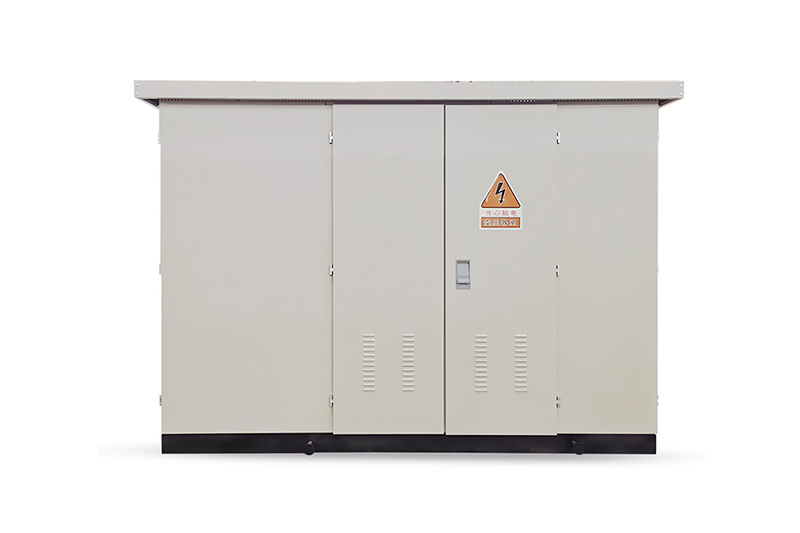
5.3 Modular Prefabricated Substations
Integrated substations combining dry-type transformers with medium-voltage switchgear and low-voltage distribution systems help shorten installation cycles and improve project delivery efficiency.
5.4 Low-Noise Structural Design
Advanced core clamping technology, vibration isolation bases, and optimized magnetic path design are helping reduce transformer operating noise to below 50 dB(A).
In 2026, selecting the right dry-type transformer requires a complete evaluation of efficiency level, insulation class, cooling method, protection degree, harmonic adaptability, and certification compliance.
With the full implementation of GB/T 10228—2023 and continued enforcement of EU ErP Tier 2 regulations, low-loss, high-reliability, and intelligent dry-type transformers have become the standard expectation for modern projects.
Whether you are an engineer, EPC contractor, project designer, or procurement manager, understanding these specifications and standards is the first step toward ensuring project compliance, reducing life-cycle cost, and achieving long-term stable operation.