Dry-Type Transformer Industry Trends: Smart Monitoring, Low Loss and Green Power Systems
Time:2026-05-7 Auther:ZTelec-www.ztelectransformer.com
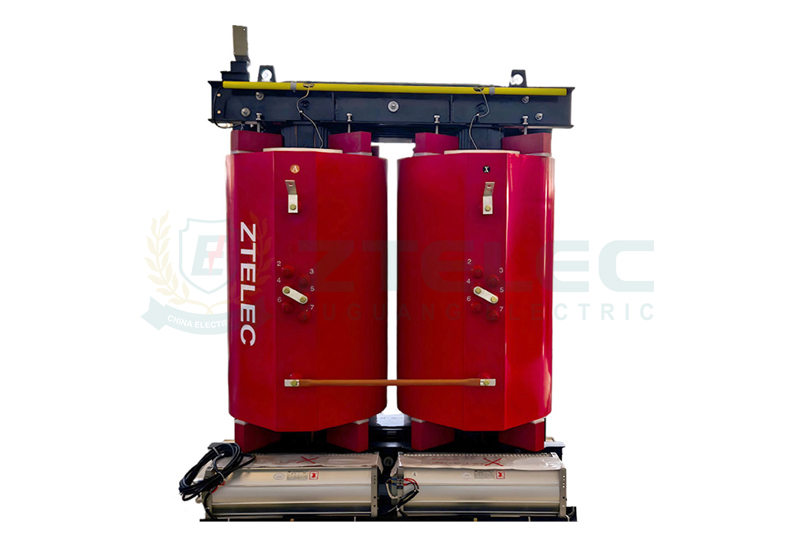
Over the past decade, the market penetration rate of dry-type transformers has continued to rise rapidly. From subway stations and commercial complexes to offshore wind farms and hyperscale data centers, more industries are replacing conventional oil-immersed transformers with dry-type solutions.
This transition is no longer driven solely by fire safety considerations. Under the pressure of carbon reduction targets and energy efficiency regulations, dry-type transformers are becoming a key component of modern low-carbon power infrastructure.
At the same time, the dry-type transformer industry is undergoing a new round of technological evolution. Smart sensors, amorphous alloy cores, advanced solid insulation systems and digital lifecycle management platforms are reshaping what was once considered a mature and relatively stable product category.

Smart Monitoring: From Manual Inspection to Intelligent Self-Diagnosis
Traditional transformer maintenance relied heavily on manual inspection. Maintenance personnel periodically checked operating temperatures, insulation resistance and external conditions. This approach was manageable when substations contained a limited number of devices, but it is increasingly insufficient for modern digital substations and distributed energy networks.
The real transformation of intelligent monitoring systems is not simply the addition of more sensors. The core change lies in the way operational information is collected, transmitted and analyzed. Instead of waiting for human intervention, transformers can now continuously report their operating status in real time.
Modern dry-type transformer monitoring systems usually integrate multiple layers of diagnostic technologies.
Online Temperature Monitoring
Fiber optic temperature sensing technology is becoming widely adopted in high-voltage dry-type transformers. Compared with conventional thermal resistors, fiber optic sensors can be embedded directly inside transformer windings to measure actual hotspot temperatures rather than estimating them through external conditions.
This capability is especially important in high-altitude, high-temperature or heavily loaded environments where traditional measurement methods often produce significant deviations.
Partial Discharge Detection
Partial discharge is one of the earliest indicators of insulation degradation inside dry-type transformers. However, its signals are weak and easily affected by industrial electromagnetic interference.
By combining ultrasonic sensors with high-frequency current transformers and intelligent signal processing algorithms, operators can continuously monitor discharge trends without shutting down equipment. This shifts fault detection from the stage of visible discharge failure to the much earlier stage of insulation deterioration.
Vibration and Noise Analysis
Mechanical abnormalities in transformer cores often appear before major electrical parameter changes occur. Acceleration sensors can collect vibration spectrum data and compare it with normal operating baselines to identify problems such as loose core structures or insulation damage between silicon steel laminations.
Some advanced monitoring platforms also integrate acoustic pattern recognition technology to analyze operating sound signatures collected through industrial microphones.
After operational data is uploaded to cloud-based platforms, it can be combined with historical load curves and environmental conditions to generate predictive maintenance recommendations and remaining service life estimations.
Today, several transformer manufacturers have started integrating full lifecycle management platforms into their product offerings. As a result, competition in the transformer market is no longer based solely on hardware performance. Data services and intelligent maintenance capabilities are becoming important competitive advantages.
Low-Loss Technology: The Return of Amorphous Alloy Cores
Any discussion about low-loss dry-type transformers inevitably leads to amorphous alloy core technology.
Amorphous alloy transformers are not entirely new. Commercial applications already existed decades ago. However, high material costs and manufacturing complexity limited widespread adoption for many years.
With improvements in domestic amorphous ribbon production and advances in wound-core manufacturing processes, the cost premium of amorphous alloy dry-type transformers has gradually decreased. Market conditions are now far more favorable than they were ten years ago.
Compared with traditional silicon steel cores, amorphous alloy cores can reduce no-load losses by approximately 70% to 80%. Since no-load losses remain constant regardless of transformer loading conditions, the long-term energy savings are significant for continuously operating distribution transformers.
For example, a conventional 800 kVA dry-type transformer may generate approximately 1.7 kW of no-load loss continuously throughout the year. Replacing it with an amorphous alloy transformer can dramatically reduce annual energy consumption and operating costs.
Under growing global carbon reduction pressure, this energy-saving advantage has gained even greater strategic importance. Energy-efficient transformer policies and government incentive programs in several regions are accelerating the adoption of amorphous alloy transformer technology.
At the same time, three-dimensional wound core structures are becoming increasingly common. Compared with traditional laminated cores, three-dimensional wound cores offer more symmetrical magnetic circuits, improved flux balance and lower harmonic distortion.
These advantages also help reduce vibration and operating noise, making such transformers highly suitable for hospitals, commercial buildings, transportation hubs and other noise-sensitive environments.

Solid Insulation and Advanced Materials
Epoxy resin casting remains the mainstream insulation technology for dry-type transformers because of its excellent moisture resistance, corrosion resistance and environmental adaptability.
However, conventional cast resin insulation systems also have limitations. After curing, epoxy resin structures can become relatively brittle. Under repeated thermal cycling conditions, microcracks may gradually develop and eventually reduce insulation reliability.
To address this issue, a new generation of flexible solid insulation materials and advanced polymer systems is entering the market.
These materials maintain excellent electrical insulation performance while significantly improving thermal expansion compatibility with copper and aluminum conductors. Reduced internal mechanical stress during temperature fluctuations leads to better crack resistance and improved long-term durability.
Several next-generation insulation systems have already completed multi-year field validation in wind power applications, where transformers experience frequent and severe load fluctuations.
Another important research direction is superconducting transformer technology. Superconducting transformers can theoretically reduce winding losses to nearly zero while dramatically reducing transformer size and weight.
Although multiple research organizations have successfully tested medium-voltage superconducting dry-type transformer prototypes, the complexity and maintenance cost of liquid nitrogen cooling systems remain major barriers to large-scale commercialization.
Industry experts generally believe that widespread commercial deployment of superconducting transformers still requires more than a decade of technological and economic development.
The Expanding Role of Dry-Type Transformers in Green Power Systems
The role of dry-type transformers in modern power systems is evolving from simple voltage conversion equipment into critical energy conversion nodes.
Renewable energy integration creates significantly more complex operating conditions than conventional utility grids. Solar and wind power systems generate higher harmonic content, frequent voltage fluctuations and bidirectional power flow conditions.
These factors place much higher demands on transformer insulation systems, thermal stability and magnetic core materials.
As a result, manufacturers are developing specialized dry-type transformer series optimized for renewable energy applications with enhanced harmonic resistance and wide-frequency operational stability.
Energy storage systems create another demanding operating environment. Dry-type transformers used between power conversion systems and utility grids must tolerate rapid charging and discharging cycles with continuously changing current directions and amplitudes.
These repeated dynamic stresses place extremely high requirements on winding mechanical strength and thermal stability.
Several energy storage projects have already experienced unexpected shutdowns caused by winding loosening or accelerated insulation aging, prompting the industry to reconsider transformer design standards for battery storage applications.
Data centers are another rapidly expanding application area. The explosive growth of artificial intelligence and cloud computing has dramatically increased electricity demand in hyperscale facilities.
Because data centers require extremely reliable power supply while maintaining strict limits on noise and electromagnetic interference, compact low-noise dry-type transformers have become a preferred solution for internal power distribution systems.
Stricter Standards and Changing Market Access Requirements
Beyond technology development, evolving efficiency standards are also reshaping the dry-type transformer market.
The latest revisions of transformer efficiency standards introduce stricter loss limits and align more closely with international IEC requirements. Some transformer models that previously met older standards may no longer satisfy current market access requirements.
At the same time, European ErP efficiency regulations are having a growing influence on export-oriented transformer manufacturers. Many international tenders now directly specify high-efficiency performance grades as mandatory technical requirements.
For transformer manufacturers involved in global markets, low-loss technology is no longer optional. It has become an essential part of long-term product competitiveness.
The dry-type transformer industry is entering a rare period where technology innovation and energy policy are advancing simultaneously.
Amorphous alloy cores are reducing energy consumption, intelligent monitoring systems are extending operational lifespan, advanced insulation materials are expanding environmental adaptability, and green power infrastructure is continuously increasing demand for high-performance transformers.
This transformation is not driven by a single breakthrough technology. Instead, it is the result of multiple innovations evolving together across materials, monitoring systems, manufacturing processes and power system applications.
For equipment buyers and project developers, transformer selection can no longer focus only on initial procurement cost. Lifecycle operating efficiency, digital monitoring capability and future adaptability are becoming equally important evaluation factors in modern power infrastructure projects.