Dry-Type Transformer Overload Capacity Standards: Key to Enhancing Power System Reliability
Time:2025-11-22 Auther:ZTelec-www.ztelectransformer.com
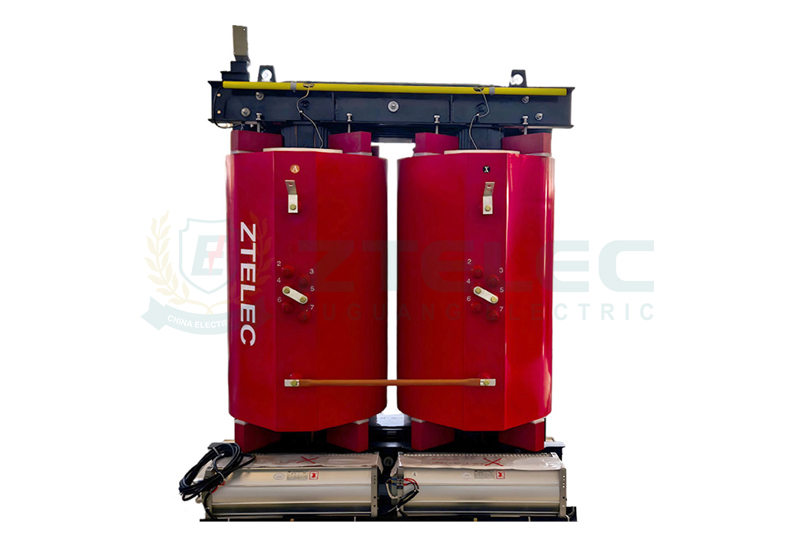
In modern power systems, dry-type transformers are widely applied in commercial buildings, industrial facilities, data centers, and other critical locations due to their fire resistance, environmental friendliness, and low maintenance requirements. With increasing frequency of load fluctuations and sudden overload events, the overload capacity of dry-type transformers has become a crucial factor in ensuring stable power system operation. This article analyzes the relevant standards and explains their role in power system reliability.
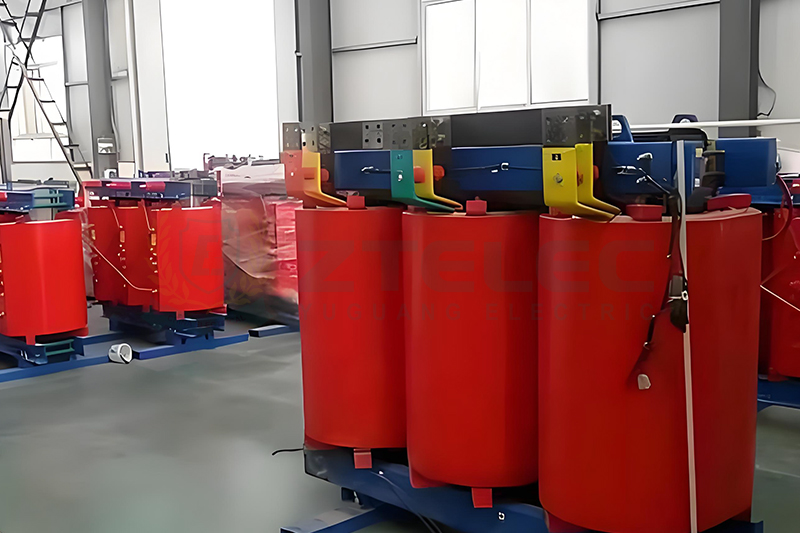
Understanding Overload Capacity of Dry-Type Transformers
The overload capacity of a dry-type transformer refers to its ability to withstand short-term loads exceeding its rated capacity without damage. This capability is defined by international standards such as IEC 60076 and IEEE C57.96, as well as manufacturer specifications. Overload capacity directly impacts operational safety and service life under sudden load conditions.
Ensuring adequate overload capacity is vital for maintaining continuity and stability of power supply during unexpected load increases.
Factors Affecting Overload Capacity
1. Material Factors
The core and winding materials significantly influence overload capacity. High-permeability core materials reduce saturation under overload, while high-temperature resistant winding conductors improve overload tolerance and extend service life.
2. Heat Dissipation Conditions
Dry-type transformers dissipate heat primarily through air convection and heat sinks. Efficient heat dissipation extends operating time under overload, whereas poor dissipation raises winding temperature and shortens lifespan.
3. Ambient Temperature
High ambient temperatures can decrease overload capacity by reducing heat dissipation. Transformer selection must consider environmental temperature conditions to ensure reliable operation.
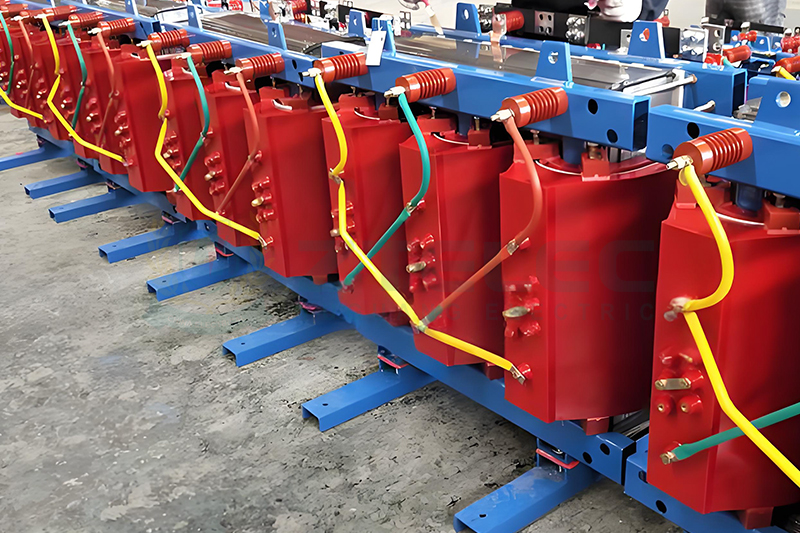
Standards and Implementation Requirements
1. Standard Provisions
Dry-type transformers are required to withstand specified overload ranges without exceeding rated current or compromising service life. Overload capacity is typically expressed as a multiple of rated power, commonly 1.1 or 1.2 times, in compliance with national and international standards.
2. Implementation Requirements
To comply with overload capacity standards, the following must be observed:
Determine rated current and overload conditions based on transformer capacity and operating environment.
Control overload current to prevent insulation damage and maintain equipment integrity.
Monitor winding temperature and temperature rise in real time to accurately manage overload levels.
Optimization Measures for Overload Capacity
1. Use High Insulation Grade Materials
H-grade insulation improves heat resistance and enhances overload tolerance.
2. Optimize Heat Dissipation Design
Forced air cooling systems, improved heat sink structure, and better ventilation increase heat dissipation efficiency.
3. Install an Intelligent Monitoring System
Temperature sensors and load monitoring equipment enable real-time tracking and timely warnings for overload risks.
4. Conduct Regular Maintenance and Testing
Routine maintenance and overload testing according to standards ensure transformers remain in optimal operating condition.
The overload capacity of dry-type transformers is essential for power system reliability. By adhering to international standards, optimizing design, implementing intelligent monitoring, and performing regular maintenance, transformers can effectively withstand temporary overloads, ensuring continuous and stable power supply under emergency conditions.