How to Choose a 1000kVA Dry-Type Transformer for Commercial & Industrial Projects
Time:2026-05-11 Auther:ZTelec-www.ztelectransformer.com
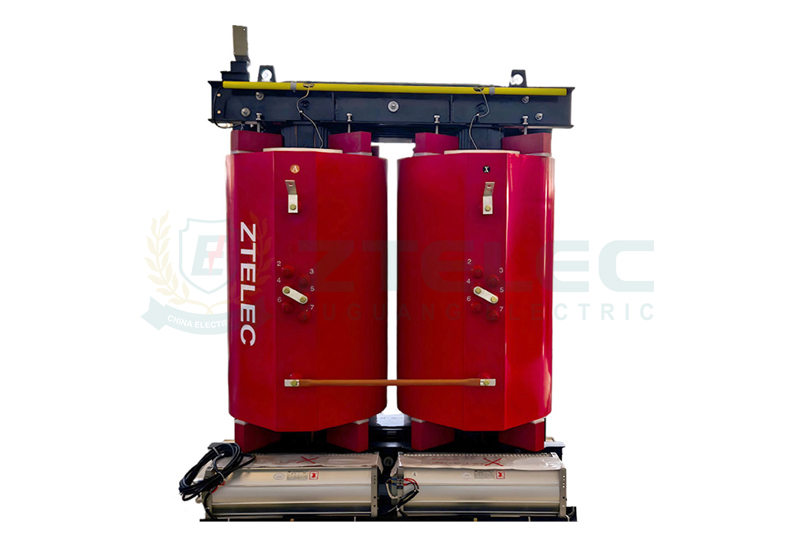
The 1000kVA dry-type transformer is one of the most widely used power distribution solutions in modern commercial and industrial projects. It is commonly installed in office buildings, shopping malls, manufacturing plants, hospitals, data centers, and transportation infrastructure. Selecting the right transformer not only affects power system reliability and operational safety, but also has a direct impact on long-term energy costs and maintenance expenses.

In many projects, procurement teams focus primarily on purchase price while overlooking critical factors such as load matching, voltage configuration, insulation system, protection rating, and energy efficiency. As a result, transformers may operate under inefficient loading conditions, experience excessive temperature rise, or face future expansion limitations.
This guide provides a systematic approach to selecting a 1000kVA dry-type transformer, covering capacity calculation, voltage ratings, insulation classes, energy efficiency standards, cooling methods, and common selection mistakes to help engineers and project owners make informed decisions.
Why Commercial & Industrial Projects Prefer Dry-Type Transformers
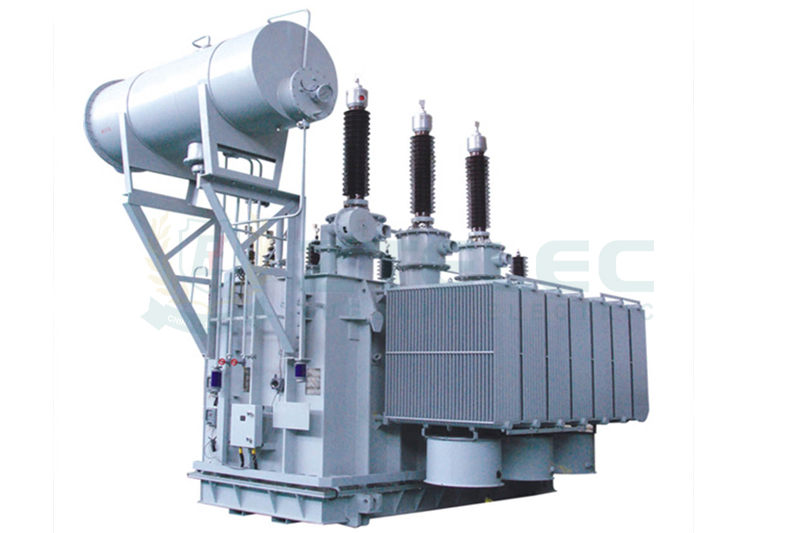
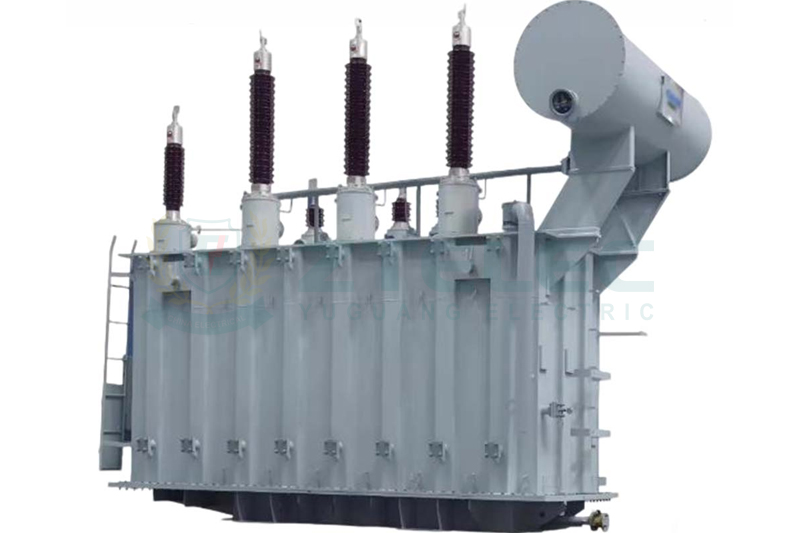
Compared with traditional oil-immersed transformers, dry-type transformers offer significant advantages in commercial and industrial indoor installations. Since they do not use insulating oil, there is no risk of oil leakage, fire, or environmental contamination. This allows them to be safely installed inside buildings, basements, or densely populated areas.
Dry-type transformers also require less maintenance because there is no need for periodic oil replacement or oil filtration. Their compact structure allows installation closer to the load center, reducing low-voltage cable losses and improving overall power distribution efficiency.
As green building standards and fire safety regulations become stricter, dry-type transformers have become the preferred choice for hospitals, data centers, metro stations, high-rise buildings, and other critical infrastructure projects.
Is a 1000kVA Transformer Suitable for Your Project?
Before selecting a 1000kVA dry-type transformer, accurate load calculation is essential. An undersized transformer may lead to insufficient power supply, while an oversized transformer increases investment cost and reduces operating efficiency.
The first step is to calculate the total installed load of all electrical equipment, including lighting, HVAC systems, elevators, industrial machinery, and special-purpose equipment. A demand factor should then be applied based on actual operating characteristics. For most commercial and industrial projects, the demand factor typically ranges between 0.65 and 0.85.
Because transformer capacity is measured in kVA rather than kW, power factor must also be considered. If the overall project power factor is approximately 0.9, the required transformer capacity equals the active load divided by 0.9.
In practical engineering applications, an additional 10%–20% spare capacity is usually reserved for future expansion. If the calculated load falls within the range of 800–1100kVA, a 1000kVA transformer is generally the most economical and practical standard choice.
| Project Type | Typical Scale | 1000kVA Application |
|---|---|---|
| Commercial Office Building | Approx. 8,000–12,000㎡ | Suitable for HVAC, elevators, lighting, and smart systems |
| Industrial Plant | Depends on equipment load | Ideal for medium-sized manufacturing facilities |
| Small Data Center | IT load around 600–800kW | Supports UPS and precision cooling systems |
| Medium-Sized Hospital | Approx. 5,000–8,000㎡ | Suitable for medical equipment and cleanroom systems |
| Commercial Complex | Depends on tenant mix | Can supply individual zones or floors |
How to Select the Correct Voltage Rating
The transformer primary and secondary voltage ratings must match both the local utility supply system and the project’s electrical equipment requirements.
In China, 10kV is the most common medium-voltage supply level for commercial and industrial projects, while some large industrial parks may use 20kV or 35kV systems. The utility connection voltage must be confirmed before procurement because it cannot be changed later.
On the low-voltage side, 0.4kV (400V/230V) is the standard distribution voltage for most commercial and industrial applications. Certain industrial motor systems may require 0.69kV, while some data center projects use 480V distribution systems.
Dyn11 is the most commonly used vector group configuration because it effectively suppresses third harmonics and supports mixed single-phase loads in commercial buildings.
If the project contains large numbers of variable frequency drives, UPS systems, rectifiers, or other nonlinear loads, harmonic analysis should be conducted and K-factor transformers or harmonic filtering solutions may be required.
Importance of Insulation Class and Temperature Rise
The insulation class determines the maximum allowable operating temperature of the transformer and directly affects service life and operational reliability.
| Insulation Class | Maximum Temperature | Typical Applications |
|---|---|---|
| Class B | 130°C | Light-duty or standard environments |
| Class F | 155°C | Mainstream commercial and industrial projects |
| Class H | 180°C | High-temperature or heavy-load environments |
| Class C | Above 220°C | Extreme industrial applications such as metallurgy and chemical plants |
Today, most commercial and industrial projects use Class F insulation with 100K temperature rise because it offers the best balance between performance and cost. For high ambient temperature regions or continuous heavy-load applications, upgrading to Class H insulation is recommended.

How to Choose the Right IP Protection Rating
The IP protection rating determines the transformer enclosure’s resistance to dust, moisture, and foreign objects. Different installation environments require different protection levels.
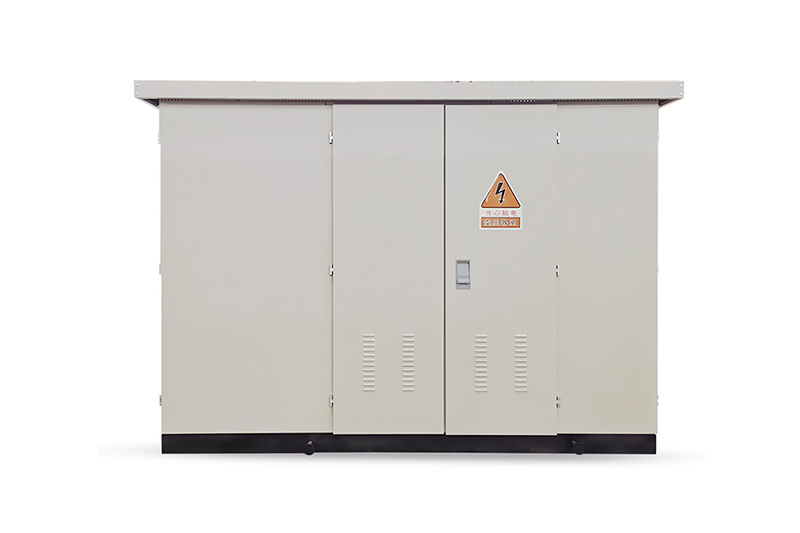
IP20 is commonly used for standard indoor electrical rooms and prevents accidental human contact. IP44 is suitable for industrial environments exposed to dust, oil mist, or humidity, while IP54 is recommended for dusty areas or locations requiring water cleaning operations.
For semi-open installations, underground substations, or areas close to water sources, higher protection ratings are strongly recommended to ensure long-term operational reliability.
Energy Efficiency and Lifecycle Operating Cost
Current Chinese dry-type transformer efficiency standards are based on GB/T 10228, which classifies products into Level 1 and Level 2 energy efficiency categories.
Although Level 1 energy-efficient transformers have slightly higher initial costs, they significantly reduce no-load and load losses, resulting in substantial long-term electricity savings. For commercial and industrial facilities operating more than 8,000 hours annually, energy savings can recover the initial price difference within a few years.
For example, if a Level 1 1000kVA transformer reduces no-load losses by approximately 4,000kWh annually compared with a standard model, the cumulative electricity savings over 10 years can greatly exceed the initial purchase cost difference.
Therefore, for long-term operating projects, selecting a Level 1 energy-efficient dry-type transformer is generally the most economical solution.
Cooling Methods and Operational Stability
1000kVA dry-type transformers typically use either AN natural air cooling or AF forced-air cooling systems.
AN cooling relies on natural air convection and offers a simple structure with lower noise levels, making it suitable for most stable commercial loads.
AF cooling uses temperature-controlled fans to improve heat dissipation efficiency and increase short-term overload capability, making it more suitable for industrial applications with fluctuating or impact loads.
If the project includes large HVAC systems, heavy motor starting currents, or periodic peak loads, an AN/AF combined cooling system is highly recommended.
Critical Factors to Verify Before Purchasing
Before finalizing procurement, confirm that the transformer rated capacity fully covers the calculated load while reserving future expansion margin. Voltage ratings, vector group configuration, and protection class should also match the electrical design drawings.
Additionally, verify that the transformer has CCC certification, type test reports, and complete factory testing documentation. Manufacturer service capability, spare parts availability, and local technical support should also be carefully evaluated.
Common Transformer Selection Mistakes
One common misconception is that larger transformer capacity always provides greater safety. In reality, transformers operating continuously below 30% load suffer from higher no-load loss ratios and reduced overall efficiency, while also increasing capital cost.
Another frequent mistake is ignoring harmonic effects. Data centers, VFD systems, and UPS equipment generate significant harmonic currents that can cause additional heating in standard transformers. Proper harmonic evaluation is therefore essential.
Focusing only on purchase price rather than total lifecycle cost is also a major issue in many projects. Low-cost transformers often have higher losses, poorer temperature control, and shorter service life.
Selecting a 1000kVA dry-type transformer is ultimately a balance between safety, reliability, energy efficiency, and future scalability.
From load capacity and voltage ratings to insulation systems, protection levels, and energy efficiency standards, every parameter directly influences long-term operating performance and maintenance cost.
For commercial and industrial projects, proper transformer selection not only improves power system reliability but also significantly reduces long-term operational expenses. It is strongly recommended to involve experienced electrical engineers during the design phase and choose a transformer solution based on actual project requirements and local utility standards rather than price alone.