Top 3750kVA Dry-Type Transformers: Price, Specifications and Buying Guide
Time:2026-01-5 Auther:ZTelec-www.ztelectransformer.com
In large-scale industrial facilities, data centers, renewable energy power plants, and modern urban power distribution systems, the 3750kVA dry-type transformer plays a critical role in ensuring stable and efficient electricity supply. As a high-capacity power distribution device, its operational reliability, safety performance, and energy efficiency directly influence the stability of the entire electrical system.
Compared with traditional oil-immersed transformers, dry-type transformers offer improved fire safety, reduced environmental risk, and simplified maintenance. Because of these advantages, the 3750kVA dry-type transformer has become an ideal solution for many medium-to-large power distribution projects. This article introduces the key technical specifications, application scenarios, and market price references to help buyers make informed purchasing decisions.

Key Technical Features of 3750kVA Dry-Type Transformers
Transformers in the 3750kVA capacity range are designed to operate reliably in demanding environments. To ensure long-term performance and operational safety, most high-quality models are manufactured with advanced insulation systems and modern production technologies.
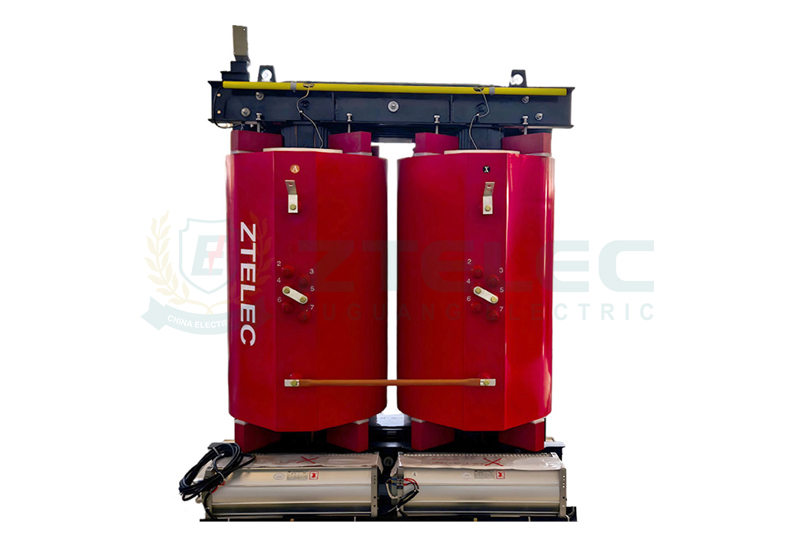
Typical design features include the use of F-class or H-class insulation systems, which provide high thermal endurance and long service life. Many manufacturers adopt epoxy resin casting technology or VPI (Vacuum Pressure Impregnation) processes to improve insulation strength and moisture resistance.
In addition, energy-efficient designs with optimized magnetic circuits are commonly applied to reduce no-load and load losses. Most products are designed and tested according to international standards such as IEC 60076 or IEEE transformer standards, ensuring global compatibility and reliable performance under continuous high-load operation.
Applications of 3750kVA Dry-Type Transformers
Due to their excellent safety performance and environmental friendliness, dry-type transformers are widely used in locations where fire safety and indoor installation are important considerations.
In high-rise commercial buildings, 3750kVA dry-type transformers provide stable voltage supply while eliminating the risk of oil leakage and fire hazards associated with oil-filled equipment.
For data centers, these transformers can be installed close to load centers, reducing transmission losses and eliminating the need for oil containment systems. This design improves both safety and operational efficiency.
In renewable energy projects, such as photovoltaic power stations and wind farms, 3750kVA transformers are commonly used as step-up transformers or auxiliary power transformers to ensure stable grid integration.
Core Technical Parameters of 3750kVA Dry-Type Transformers
Electrical Parameters
The rated capacity of the transformer is 3750kVA, designed for three-phase power distribution systems operating at either 50Hz or 60Hz. The high-voltage side typically supports voltage levels such as 6kV, 10kV, 20kV, or 35kV, while the low-voltage side commonly operates at 400V or 690V. Customized voltage combinations can also be provided depending on project requirements.
The voltage regulation method usually adopts off-circuit tap changing, with a regulation range commonly set at ±2×2.5% or ±5%. This allows the transformer to maintain stable voltage output under varying grid conditions.
Design and Manufacturing Standards
Most professional manufacturers design 3750kVA dry-type transformers in compliance with IEC 60076 or GB/T 10228 standards. These standards define electrical performance, testing requirements, and safety parameters.
The insulation system generally adopts Class F (155°C) or Class H (180°C) thermal ratings. Many high-end manufacturers design according to Class H insulation but operate under Class F conditions to provide additional thermal safety margin and extended equipment life.
For example, a transformer rated at 10kV typically has a lightning impulse withstand voltage of approximately 75kV and a power frequency withstand voltage of around 35kV.
Structure and Environmental Performance
Standard enclosure protection levels include IP20, IP23, IP31, and IP54, allowing the transformer to adapt to different installation environments. Cooling methods usually include AN (natural air cooling) and AF (forced air cooling).
Under AN cooling mode, the transformer can operate continuously at full rated capacity. When AF cooling is applied, the short-term overload capacity can increase by approximately 40%, which is beneficial for applications with fluctuating load demand.
The insulation medium is typically flame-retardant epoxy resin, providing excellent moisture resistance and fire safety. During full-load operation, the transformer noise level is generally controlled between 65 dB and 72 dB, meeting most industrial and commercial installation standards.

3750kVA Dry-Type Transformer Market Price Reference
The price of a 3750kVA dry-type transformer varies depending on configuration, raw materials, and technical requirements. Based on international market observations, several price ranges can be referenced.
For standard configuration models, the typical market price ranges from approximately $20,000 to $45,000 per unit. These transformers usually meet standard industrial power distribution requirements.
High-efficiency or low-loss models designed for energy-saving projects may range from approximately $45,000 to $75,000. These units typically use premium silicon steel cores and optimized electromagnetic designs.
For customized transformers designed for special voltage levels, harsh environments, or advanced monitoring systems, prices may exceed $80,000 depending on the complexity of the technical specifications.
It should be noted that the final quotation must be confirmed by the manufacturer based on detailed parameters such as voltage combination, vector group, impedance voltage, and enclosure protection requirements.
3750kVA Dry-Type Transformer Selection Recommendations
When selecting a transformer for large-scale power distribution projects, buyers should first confirm the fundamental project parameters including voltage levels, load characteristics, installation environment, and available installation space.
Energy efficiency should also be a key consideration. Transformers with lower no-load and load losses may require slightly higher initial investment but can significantly reduce long-term operating costs.
Material quality is another important factor. Transformers that use copper windings, high-permeability silicon steel cores, and mature epoxy casting processes generally offer greater reliability and longer service life.
Buyers should also verify the manufacturer’s qualifications, including ISO-certified quality management systems and official transformer testing reports. These certifications help ensure stable product quality and reliable performance.
Finally, it is recommended to request a detailed quotation from the manufacturer that includes core materials, component specifications, and technical parameters. Clear pricing structures help buyers compare suppliers more effectively and evaluate overall cost performance.
With its excellent fire safety, high reliability, and strong load capacity, the 3750kVA dry-type transformer is widely considered an ideal solution for medium and large power distribution systems. Although the initial purchase cost may be higher than smaller transformers, its long service life, low maintenance requirements, and improved safety performance make it a valuable long-term investment.
If you are planning a power distribution project and require accurate pricing information, please provide your technical specifications. Our engineering team can quickly provide a professional quotation and customized transformer solution based on your project requirements.