Transformer Altitude Derating: Capacity & Insulation
Time:2026-10-30 Auther:ZTelec-www.ztelectransformer.com
A transformer that performs perfectly at sea level can run hot, or fail an insulation test, when it is installed in the mountains. Thinner air changes both cooling and dielectric strength.
This guide explains why altitude matters, how it affects a dry type transformer and an oil immersed power transformer, and how to specify the right unit for projects above 1,000 metres.
Why Altitude Matters for Transformers
Standard transformer ratings assume operation at or below 1,000 m above sea level. Above that height, air pressure and air density fall steadily.
Two things happen as a result. Air removes heat less effectively, and air becomes a weaker electrical insulator. Each effect needs its own correction.
The Two Effects of High Altitude
Effect 1: Weaker Cooling
Heat leaves a transformer by convection and radiation into the surrounding air. Lower air density means fewer air molecules carry heat away from radiators, enclosures and winding surfaces.
The result is a higher temperature rise for the same load. Higher temperature accelerates insulation ageing and shortens service life.
Effect 2: Lower Dielectric Strength of Air
Air breaks down at a lower voltage when its density drops. Clearances between live parts, bushing external insulation and creepage distances are all affected.
A design that passes a lightning impulse test at sea level may flash over at altitude, unless the external insulation is increased.
Derating Capacity: The Cooling Side
Oil Immersed Power Transformer
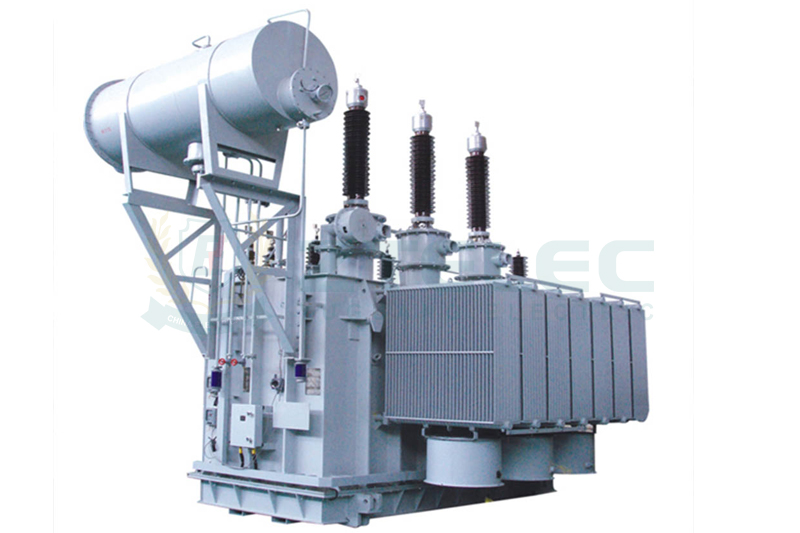
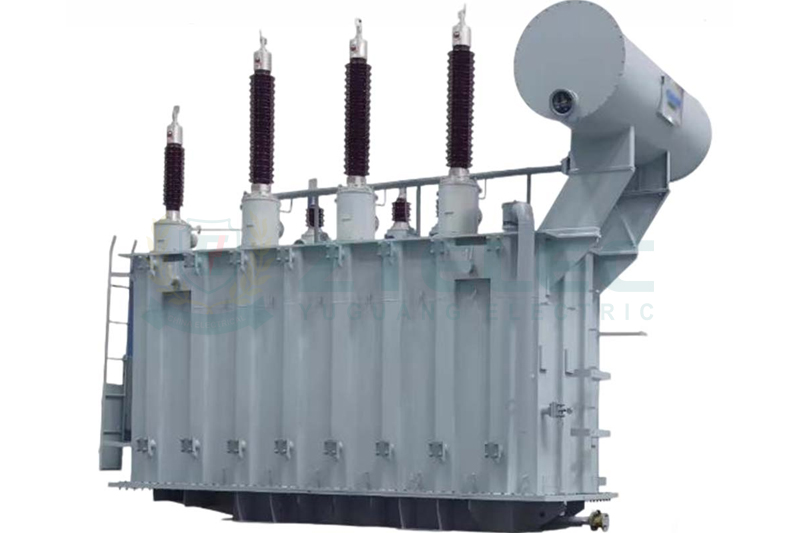
In an oil immersed power transformer, the windings sit in oil. The oil carries heat to the tank and radiators, which then rely on surrounding air for cooling.
Because only the outer surfaces depend on air, the altitude effect is moderate. Common practice under IEC 60076-2 reduces the allowed temperature rise by about 0.4% for every 100 m above 1,000 m for natural oil-air cooling, and about 0.5% per 100 m for forced air cooling.
Dry Type Transformer
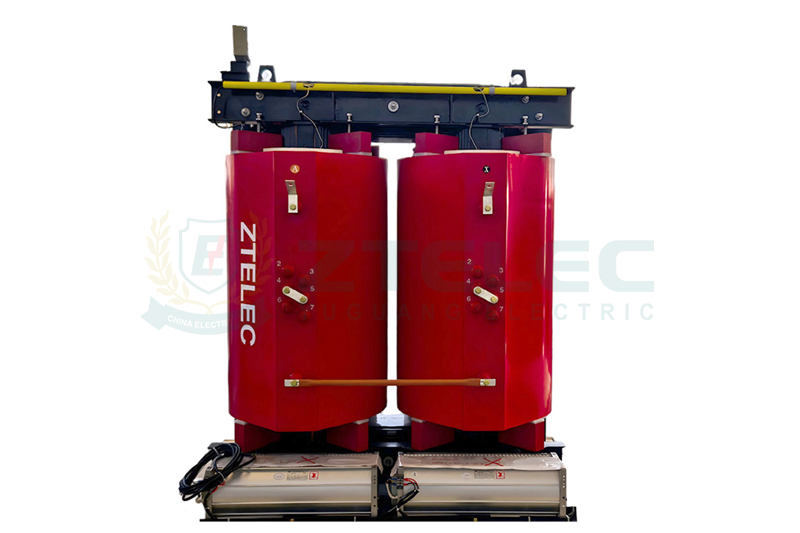
A dry type transformer depends directly on air to cool its windings and core. There is no oil layer to buffer the effect, so altitude has a stronger influence.
Under IEC 60076-11, the temperature rise limit is commonly reduced by about 2.5% for every 500 m above 1,000 m for natural air cooling, and about 5% for every 500 m for forced air cooling.
Always confirm the exact values against the current edition of the standard that applies to your contract.
Altitude Derating Table
The table shows the approximate reduction in permitted temperature rise at different altitudes for natural cooling, and the increase needed in external insulation strength.
| Altitude | Oil Immersed (ONAN), Temp. Rise Reduction | Dry Type (AN), Temp. Rise Reduction | External Insulation Increase |
|---|---|---|---|
| 1,000 m | 0% | 0% | 0% |
| 1,500 m | 2% | 2.5% | 5% |
| 2,000 m | 4% | 5% | 10% |
| 2,500 m | 6% | 7.5% | 15% |
| 3,000 m | 8% | 10% | 20% |
| 4,000 m | 12% | 15% | 30% |
These figures are planning values based on common standard practice. Actual requirements depend on the standard, the cooling method and the supplier’s design.
Derating Insulation: The Dielectric Side
Which Parts Are Affected
In an oil immersed power transformer, the internal insulation is oil and paper. Its performance does not change with altitude, so the windings inside the tank are not affected.
The external parts are the weak point. Bushings, air clearances, connection terminals and cable boxes all rely on air.
The 1% Per 100 m Rule of Thumb
A widely used rule says the external insulation withstand level should be increased by about 1% for every 100 m above 1,000 m. This follows the altitude correction approach in IEC standards for insulation coordination.
For example, at 3,000 m the external withstand voltage should be about 20% higher than at standard altitude.
Dry Type Transformers Need Extra Care
In a dry type transformer, air is part of the main insulation system between turns, layers and phases. High altitude can therefore affect the whole winding, not only the bushings.
Cast resin designs have solid insulation, but surface tracking and clearances still need review. Manufacturers often use larger air gaps, higher impulse levels or additional barriers for high-altitude projects.
A Worked Example
Oil Immersed Power Transformer at 3,000 m
Suppose a 2,500 kVA oil immersed power transformer with natural cooling is needed at 3,000 m. That is 2,000 m above the standard limit, or 20 steps of 100 m.
At 0.4% per step, the temperature rise limit drops by 8%. In practice, the supplier either designs more cooling capacity into the unit, or you accept a lower effective capacity of roughly 8% below the nameplate rating.
For insulation, a bushing with a 125 kV lightning impulse level at standard altitude should be selected or tested for about 150 kV equivalent at this site.
Dry Type Transformer at 3,000 m
Now take a 2,000 kVA dry type transformer with natural air cooling at the same altitude. The 2,000 m above the limit equals four steps of 500 m, so the temperature rise limit falls by 10%.
As a rough planning estimate, the unit needs about 10% more thermal capability. Many buyers solve this by selecting the next larger size or adding forced air cooling fans.
What About Colder Air at Altitude?
Air temperature usually falls as altitude rises. This helps cooling and can partly offset the effect of thinner air.
Standards allow this offset only under defined conditions, such as a documented maximum ambient temperature at the site. Do not assume it automatically. State the real site temperatures in your enquiry so the supplier can use them.
Ways to Handle High-Altitude Projects
Option 1: Derate the Standard Unit
Accept a lower usable capacity from a standard design. This is simple, but it may mean buying a larger unit than the load strictly requires.
Option 2: Order a Purpose-Designed Unit
Ask the manufacturer to design for your altitude. The supplier adjusts winding, radiators or enclosure and insulation clearances so the nameplate capacity is available at site.
Option 3: Add Cooling
Fans on radiators or on a dry type transformer enclosure raise cooling capacity. Forced cooling also reduces the size increase needed, though it adds auxiliary equipment and monitoring.
Option 4: Use Higher-Class Insulation
Selecting a higher temperature class for insulation, such as Class H in a dry type transformer, gives more thermal margin. This must still follow the standard’s rules for temperature rise.
Other Site Factors to Check
High altitude often comes with other demanding conditions. Include them in your specification at the same time.
Strong sunlight and UV exposure affect outdoor enclosures and paint. Large day-night temperature swings put stress on gaskets and oil seals.
Dust, snow and pollution may require longer creepage distances on bushings. Seismic activity in mountain regions may call for stronger anchoring and bracing.
How to Write the Specification
State the installation altitude clearly in the enquiry, not only the country or region. Include the maximum and average ambient temperature, humidity and pollution level.
Ask the supplier to confirm how altitude was handled, whether through derating, a special design or added cooling. Request that the temperature rise and impulse levels on the test report match the site conditions.
If the unit will be tested at low altitude, ask the manufacturer to explain how the correction was applied. Reduced temperature rise limits at the factory are the usual way to prove performance at altitude.
Common Mistakes to Avoid
The first mistake is ignoring altitude because the load is light. A transformer that is lightly loaded today may be pushed harder after expansion.
The second is correcting cooling but forgetting insulation, or the other way around. Both corrections are required.
The third is assuming that an oil immersed power transformer and a dry type transformer need the same correction. Their cooling mechanisms and insulation systems differ, so the numbers differ too.
Frequently Asked Questions
At what altitude does a transformer need derating?
Standard ratings apply up to 1,000 m. Above that, derating or a special design is required.
Is a dry type transformer more affected by altitude than an oil immersed one?
Generally yes, because air cools the windings directly and also serves as part of the insulation system. Oil immersed units are less sensitive on the internal side but still need external insulation corrections.
Can I install a standard transformer at 2,500 m without changes?
It is not recommended. The unit may overheat at full load, and bushings or clearances may not meet the required withstand voltage. Ask the manufacturer for confirmation.
Altitude affects transformers in two ways: it weakens cooling and reduces the dielectric strength of air. The oil immersed power transformer is more forgiving, while the dry type transformer needs closer attention.
Specify your site altitude and temperatures early, request both capacity and insulation corrections, and compare quotations on that basis.
Send us your altitude, voltage level, capacity and ambient conditions, and our engineers will recommend a suitable design and provide a quotation.