Understanding Cast-Resin Transformers: Encapsulated vs. Cast-Coil Designs
Time:2026-02-3 Auther:ZTelec-www.ztelectransformer.com
In modern power distribution systems, cast resin transformers are widely applied in commercial buildings, industrial facilities, renewable energy projects, and urban power networks. Their excellent fire resistance, strong environmental adaptability, and low maintenance requirements make them a preferred solution for indoor and safety-sensitive installations.
During the selection process, contractors and equipment purchasers frequently face a common question: what is the real difference between encapsulated transformers and cast-coil transformers, and which design is more suitable for a specific application?
This article explains these two cast resin transformer designs from three perspectives—structural principles, performance characteristics, and application scenarios—to support accurate and cost-effective decision-making.

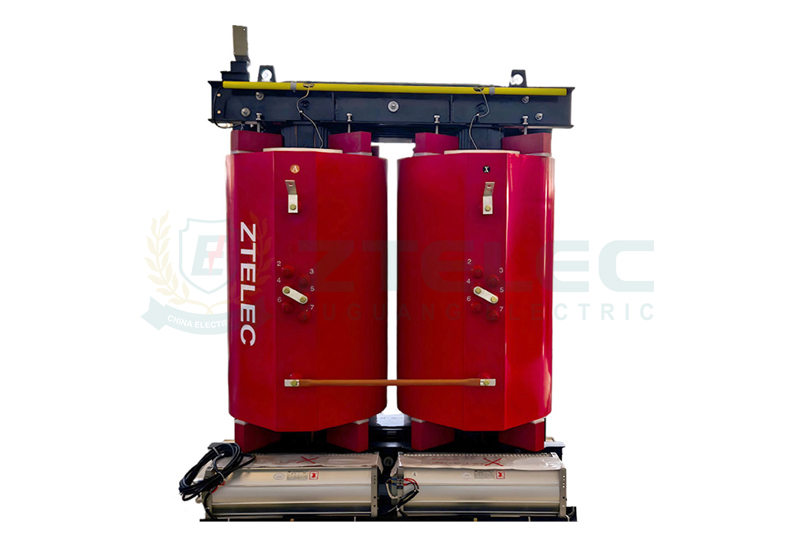
Cast-Coil Transformers
Design Principle
Cast-coil transformers are manufactured by placing high-voltage and low-voltage windings separately into precision molds and casting them with epoxy resin under vacuum conditions. The resin fully penetrates the winding surfaces and internal gaps, forming a dense, solid insulation structure after curing. The magnetic core is typically exposed or only lightly protected.
Key Performance Characteristics
The tight bonding between epoxy resin and windings provides excellent insulation strength and very low partial discharge levels. Because the resin layer is relatively thin and the core is exposed, air convection is efficient, resulting in strong natural cooling performance.
The fully sealed coils offer outstanding resistance to moisture, dust, and chemical contamination, making cast-coil transformers suitable for harsh or polluted environments. However, this design requires advanced vacuum casting equipment and strict control of resin formulation and production processes.
Application Limitations
Cast-coil transformers demand high manufacturing precision and stable epoxy resin quality. In addition, installation environments should meet basic cleanliness requirements to maintain long-term insulation performance.

Encapsulated Transformers
Design Principle
Encapsulated transformers place the transformer core and windings together inside a casing or mold, where resin material is injected to encapsulate the entire active part. After curing, the transformer forms a fully enclosed protective structure. In this design, the resin mainly serves as mechanical protection and environmental sealing, and internal air gaps may remain.
Main Features
By covering both the core and coils, encapsulated transformers provide excellent mechanical protection against external impact and environmental exposure. They perform reliably in dusty, humid, or mildly corrosive environments.
Heat dissipation performance depends heavily on enclosure design. In some cases, forced air cooling is required to maintain acceptable temperature rise. Compared with cast-coil designs, encapsulated transformers are generally easier to manufacture and offer a more cost-effective solution for standard distribution systems.
Potential Limitations
Due to reduced cooling efficiency, encapsulated transformers typically have slightly lower operating efficiency than cast-coil transformers. They also tend to be heavier, and component replacement or major maintenance can be more complex.
How to Choose Based on Application Scenarios
When to Choose Cast-Coil Transformers
Cast-coil transformers are ideal for locations with high power reliability and safety requirements, such as data centers, hospital operating rooms, financial computer rooms, and critical infrastructure facilities.
They are also well suited for high-humidity or polluted environments where stable insulation performance, efficient heat dissipation, and low energy losses are essential. Projects with sufficient budgets and long-term operation goals often benefit from this design.
When to Choose Encapsulated Transformers
Encapsulated transformers are commonly used in conventional industrial, commercial, and renewable energy distribution systems where dust and moisture are present but operating conditions are relatively moderate.
They are suitable for outdoor installations, simple equipment rooms, or applications requiring enhanced mechanical protection. Projects with strict cost control and standard performance requirements often favor this solution.

Key Factors When Selecting Cast Resin Transformers
Regardless of design type, several technical factors should always be evaluated. These include rated capacity and voltage level, insulation class and temperature rise class, epoxy resin quality and manufacturing standards, partial discharge performance, and compliance with international standards such as IEC, GB, or ANSI.
Although both cast-coil and encapsulated designs belong to the cast resin transformer family, they differ significantly in design philosophy and performance focus. Cast-coil transformers emphasize electrical insulation quality, thermal performance, and operational reliability, making them suitable for critical and high-performance applications.
Encapsulated transformers prioritize overall protection, environmental adaptability, and economic efficiency, making them a practical choice for conventional power distribution environments.
If you are evaluating cast resin transformer options or require customized technical parameters, structural designs, or pricing recommendations, it is advisable to consult experienced manufacturers to ensure long-term safety, stability, and efficiency for your power distribution project.