What Is a Prefabricated Substation? Complete Guide for Power Distribution Projects
Time:2026-08-18 Auther:ZTelec-www.ztelectransformer.com
Modern power distribution projects require speed, reliability, safety, and efficient use of space. Traditional substations can meet these requirements, but they often need extensive civil construction and on-site installation.
A prefabricated substation offers a different approach. Most equipment is assembled and tested in a factory before delivery. The complete unit can then be transported to the project site for faster installation and commissioning.
This makes prefabricated substations attractive for industrial plants, commercial buildings, renewable energy projects, data centers, infrastructure projects, and remote power systems.
In this guide, we explain what a prefabricated substation is, how it works, what equipment it contains, and why more power distribution projects are adopting this modular solution.

What Is a Prefabricated Substation?
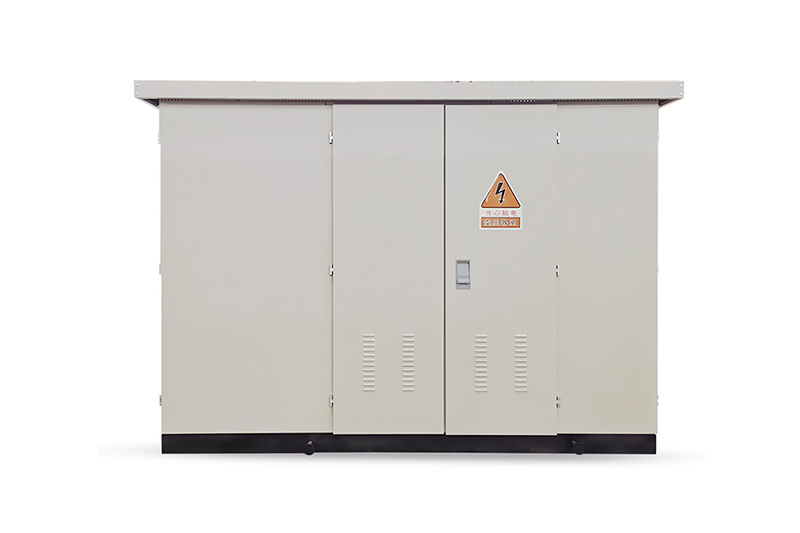
A prefabricated substation is a factory-assembled electrical substation designed for power transformation, distribution, protection, and control. It is also commonly called a packaged substation, compact substation, or modular substation, depending on its configuration.
Unlike a conventional substation, much of the equipment integration takes place in a controlled factory environment. The manufacturer assembles the transformer, switchgear, protection equipment, control systems, and enclosure according to the project requirements.
The completed unit is then transported to the installation site. After positioning and connecting the required incoming and outgoing circuits, engineers can complete site testing and commissioning.
How Does a Prefabricated Substation Differ From a Traditional Substation?
The main difference is where the substation is built and integrated.
A traditional substation usually requires significant on-site civil construction. Equipment may arrive separately and be installed and connected at the project site.
A prefabricated substation moves much of this work into the factory. This approach can reduce site work and improve production consistency.
Key Characteristics of Prefabricated Substations
Modular design: The substation can be configured around the project’s voltage, capacity, protection, and control requirements.
Compact structure: Integrated equipment can reduce the overall installation footprint compared with some conventional substation layouts.
Factory assembly: Major components are assembled and wired before shipment.
Factory testing: Manufacturers can perform inspections and functional tests before delivery.
Fast installation: The project team can complete many site activities faster because much of the assembly work is already finished.
Main Components of a Prefabricated Substation
A prefabricated substation can contain different equipment depending on the application. However, most systems include medium-voltage or high-voltage equipment, a transformer, low-voltage equipment, protection systems, and an enclosure.
1. Medium-Voltage or High-Voltage Switchgear
The incoming switchgear controls and protects the high-voltage side of the substation. It can include circuit breakers, disconnectors, current transformers, voltage transformers, protection relays, and other switching equipment.
The exact configuration depends on the voltage level and project protection requirements.
2. Power Transformer
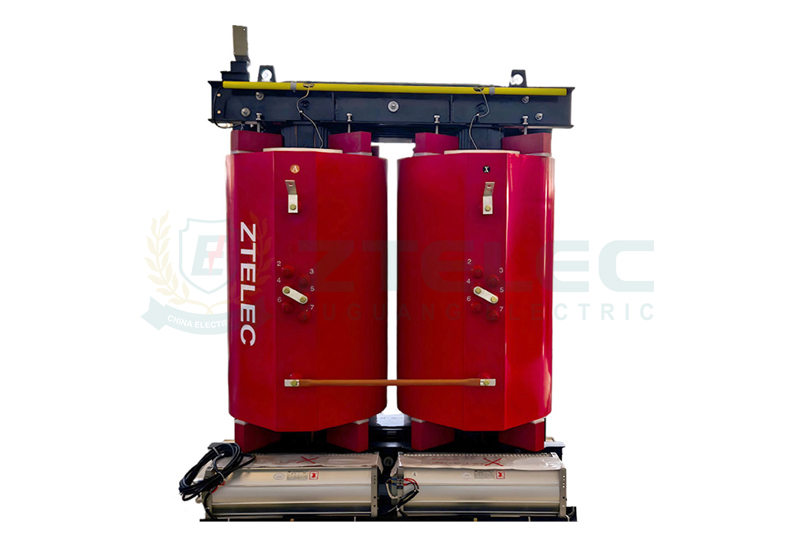
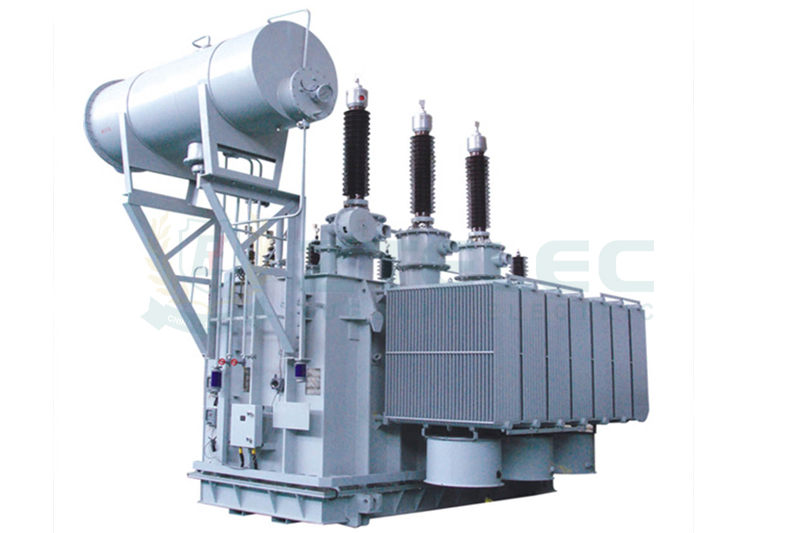
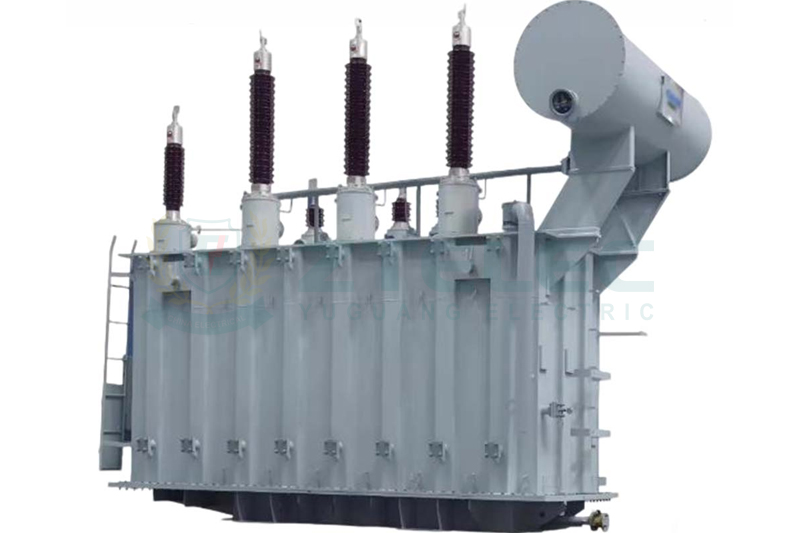
The transformer changes the voltage to the level required by the distribution system. The transformer may be a dry type transformer or an oil immersed transformer, depending on the application.
Dry type transformers are often suitable for indoor or fire-sensitive installations. Oil immersed transformers can be suitable for applications that require higher power density or specific outdoor configurations.
3. Low-Voltage Switchgear
The low-voltage switchgear distributes transformed power to downstream loads. It can include circuit breakers, switches, protection devices, metering equipment, and busbar systems.
The LV system can be customized for industrial plants, commercial buildings, data centers, renewable energy systems, and other loads.
4. Protection and Control System
Protection systems detect abnormal electrical conditions. These conditions may include short circuits, overcurrent, earth faults, or other system faults.
Protection relays can send trip signals to circuit breakers. This helps isolate faults and protect transformers, cables, switchgear, and connected equipment.
5. SCADA and Communication
Modern prefabricated substations can include remote monitoring and control systems. SCADA allows operators to collect operating data and control selected equipment from a central location.
Communication systems can also support digital substation protocols such as IEC 61850 when required by the project.
6. Auxiliary Systems
Depending on the design, auxiliary systems can include lighting, ventilation, heating, cooling, fire detection, access control, and battery systems.
These systems help maintain safe operating conditions and support reliable substation operation.
7. Substation Enclosure
The enclosure protects electrical equipment from rain, dust, moisture, sunlight, and other environmental conditions.
Steel is widely used because of its strength and durability. Other materials may also be selected when weight, corrosion resistance, or specific environmental requirements are important.
How Does a Prefabricated Substation Work?
A prefabricated substation performs the same basic electrical functions as a conventional substation. The main difference is its integrated and modular construction.
Step 1: High-Voltage Power Input
Incoming power enters the substation through the medium-voltage or high-voltage switchgear.
The incoming switchgear provides switching and protection functions. It also allows operators to isolate equipment when required.
Step 2: High-Voltage Protection
Protection relays and circuit breakers monitor the incoming electrical system. If a fault occurs, the protection system can disconnect the affected circuit.
Step 3: Voltage Transformation
The power transformer reduces or increases the voltage according to the project requirements.
For example, a distribution transformer may reduce 11 kV medium-voltage power to 400 V or another low-voltage level used by downstream equipment.
Step 4: Low-Voltage Distribution
The transformed power enters the low-voltage switchgear. The LV system then distributes electricity to industrial equipment, buildings, motors, lighting systems, or other loads.
Step 5: Monitoring and Control
The control system monitors voltage, current, temperature, protection status, and other operating parameters.
When SCADA is installed, selected data can be transmitted to a remote control center. This allows operators to monitor the substation without being physically present.
Advantages of Prefabricated Substations
Prefabricated substations can offer several practical advantages over conventional site-built solutions. The actual benefits depend on project design, location, capacity, and installation conditions.
1. Faster Project Deployment
Factory assembly can reduce the amount of work required at the installation site. At the same time, civil construction and equipment manufacturing can often proceed in parallel.
As a result, the overall project schedule may be shorter than a fully site-built solution.
However, installation time varies by project. Transport, foundation work, cable connections, testing, and local approval requirements must also be considered.
2. Better Factory Quality Control
Factory production provides a controlled working environment. Manufacturers can standardize assembly, wiring, inspection, and testing procedures.
This can improve consistency and reduce the number of site installation tasks.
3. Reduced Site Work
A prefabricated substation can reduce the amount of equipment assembly required on site. This can lower labor requirements and simplify project coordination.
It can also reduce the amount of construction activity around an operating facility.
4. Efficient Use of Space
Integrated equipment can provide a compact solution for projects with limited land availability.
This is especially useful in urban power distribution, commercial buildings, industrial plants, and infrastructure projects.
5. Flexible Configuration
Prefabricated substations can be customized according to voltage, transformer capacity, switchgear type, protection system, enclosure design, and environmental conditions.
Modular construction can also make future expansion easier when the original design allows additional capacity or equipment modules.
6. Improved Installation Safety
Factory assembly can reduce the amount of complex electrical work performed at the project site. Enclosed equipment can also limit direct exposure to energized components.
However, proper grounding, protection, access control, ventilation, and electrical safety procedures remain essential.
7. Easier Project Management
Prefabrication can simplify coordination between the equipment manufacturer, EPC contractor, civil contractor, and electrical installation team.
Much of the equipment integration is completed before shipment. Therefore, the site team can focus on foundation preparation, positioning, cable connections, testing, and commissioning.

Applications of Prefabricated Substations
Prefabricated substations are suitable for many power distribution applications. Their modular construction is especially useful when installation speed, compactness, or remote deployment is important.
Urban Power Distribution
Urban areas often have limited space and high electricity demand. Compact substations can help distribution operators install equipment where a conventional outdoor substation may require more land.
Depending on local requirements, compact systems may be installed in dedicated rooms, buildings, or suitable outdoor locations.
Industrial Facilities
Factories require reliable power for motors, production lines, HVAC systems, lighting, and process equipment.
A prefabricated substation can integrate the transformer, MV switchgear, LV switchgear, and protection system into one coordinated solution.
Renewable Energy Projects
Solar and wind projects often require electrical equipment in remote locations. Prefabricated substations can reduce on-site assembly work and simplify transportation to the project site.
They can also be configured for grid connection, collector systems, and renewable energy distribution requirements.
Data Centers
Data centers require reliable and carefully controlled power distribution. Prefabricated electrical systems can support fast deployment while integrating transformers, switchgear, monitoring, and protection equipment.
Commercial Buildings
Shopping centers, hospitals, office buildings, and large commercial facilities can use prefabricated substations where space and installation time are important factors.
Remote and Rural Projects
Remote projects can be difficult to build using conventional construction methods. Factory-integrated substations can reduce the amount of skilled assembly required at the remote site.
Temporary Power Systems
Some modular substations can be designed for temporary or relocatable applications. They can support construction projects, temporary facilities, emergency power distribution, and other short-term requirements.
Prefabricated Substation vs. Traditional Substation
The best choice depends on the project requirements. A prefabricated substation offers strong advantages in modularity and deployment speed, while a conventional substation can provide greater freedom for large and highly customized layouts.
| Factor | Prefabricated Substation | Traditional Substation |
|---|---|---|
| Construction approach | Factory assembled | Mostly site assembled |
| Installation time | Generally shorter | Generally longer |
| Site work | Reduced | More extensive |
| Space requirement | Compact configuration available | Often requires more dedicated space |
| Quality control | Factory-controlled assembly and testing | More dependent on site conditions |
| Customization | High within the modular design | Very high |
| Future expansion | Possible with suitable modular design | Depends on the original civil and electrical layout |
| Transportation | Requires transport planning for completed modules | Equipment is often transported separately |
| Best suited for | Fast, compact, modular projects | Large and highly customized installations |
How to Choose a Prefabricated Substation
Selecting the right prefabricated substation requires more than choosing the transformer capacity. Engineers should evaluate electrical, mechanical, environmental, and project-specific requirements.
1. Define Voltage and Power Requirements
First, determine the incoming voltage, outgoing voltage, transformer capacity, short-circuit level, and expected load.
Also consider future expansion. A substation designed only for today’s load may become undersized as the facility grows.
2. Select the Transformer Type
Choose between a dry type transformer and an oil immersed transformer based on the installation environment, fire requirements, capacity, maintenance strategy, and project specifications.
3. Evaluate Environmental Conditions
Consider ambient temperature, humidity, dust, pollution, rainfall, solar radiation, altitude, and corrosion conditions.
The enclosure and internal equipment should be selected for the actual installation environment.
4. Check Protection Requirements
The protection system should match the electrical network and local requirements. Consider overcurrent protection, earth fault protection, transformer protection, metering, and communication requirements.
5. Consider Enclosure and IP Rating
Outdoor prefabricated substations need suitable environmental protection. The enclosure design and IP rating should match the installation conditions.
Ventilation is also important. The enclosure must remove transformer heat while maintaining the required environmental protection.
6. Confirm Applicable Standards
The substation should comply with the standards specified by the project and local authority.
Depending on the equipment and market, applicable requirements may include IEC, IEEE, national standards, utility specifications, and local electrical codes.
7. Evaluate the Manufacturer
Choose a manufacturer with experience in transformer and substation integration. Check factory testing, quality control, certifications, project experience, technical support, and after-sales service.
8. Plan Transportation and Installation
A completed prefabricated substation can be large and heavy. Therefore, transportation must be considered early.
Check road access, lifting requirements, foundation dimensions, delivery restrictions, crane capacity, and final positioning requirements before production.
Prefabricated Substation Installation and Commissioning
One major advantage of prefabricated substations is simplified site installation. However, proper commissioning remains essential.
Site Preparation
Prepare the foundation before delivery. Confirm foundation dimensions, cable entry points, grounding connections, drainage, and access routes.
Equipment Positioning
Use suitable lifting equipment to position the substation. The unit must be installed on a stable and level foundation.
Cable Connection
Connect incoming medium-voltage cables, outgoing low-voltage cables, grounding conductors, communication cables, and auxiliary power systems according to the approved drawings.
Electrical Testing
Before energization, complete the required electrical and functional tests. These may include insulation resistance, wiring checks, protection relay tests, grounding verification, and functional checks.
Commissioning
After testing, the project team can complete commissioning and energization according to the approved procedure.
Commissioning requirements vary by voltage level, equipment type, local regulations, and utility requirements. Always follow the manufacturer’s instructions and the project’s approved commissioning plan.
Challenges and Limitations of Prefabricated Substations
Prefabricated substations offer many benefits, but they are not suitable for every project.
Transportation Requirements
Large prefabricated units can be heavy and difficult to transport. Route surveys and lifting plans may therefore be required.
Design Must Be Finalized Early
Most equipment is assembled before delivery. Therefore, major design changes after manufacturing can be difficult and expensive.
For this reason, electrical and civil interfaces should be confirmed before production begins.
Space Inside the Enclosure
Compact designs require careful thermal and electrical planning. High-capacity equipment may need a larger enclosure or a different modular configuration.
Project-Specific Customization
Prefabricated systems can be highly customized, but not every configuration is practical. Extremely complex projects may still benefit from a conventional substation layout.
Future Trends in Prefabricated Substations
The demand for modular power distribution is increasing as electricity networks become more digital, decentralized, and flexible.
Smart Substations
Smart prefabricated substations can integrate sensors, intelligent protection devices, communication systems, and remote monitoring.
These technologies allow operators to collect real-time operating data. They can also support faster fault detection and condition-based maintenance.
Digitalization and IoT
IoT devices can monitor temperature, current, voltage, vibration, and other operating parameters.
Data can then be transferred to a central monitoring platform. This can improve visibility and help operators manage distributed electrical assets.
Renewable Energy Integration
Solar and wind generation require flexible grid connection solutions. Prefabricated substations can be engineered for renewable energy applications and remote project locations.
Modular and Scalable Designs
Future systems are likely to become more modular. This can make capacity expansion and equipment replacement easier.
Modular designs can also support faster deployment when power demand changes quickly.
More Sustainable Solutions
Manufacturers are increasingly focusing on energy efficiency, recyclable materials, lower-loss transformers, and environmentally responsible insulation technologies.
These developments can help reduce the lifecycle environmental impact of power distribution equipment.
Frequently Asked Questions About Prefabricated Substations
What is a prefabricated substation?
A prefabricated substation is a factory-assembled power distribution system that integrates equipment such as transformers, switchgear, protection devices, and control systems into a modular enclosure.
What is another name for a prefabricated substation?
Depending on the design and market, it may also be called a packaged substation, compact substation, modular substation, or containerized substation.
How long does it take to install a prefabricated substation?
Installation time varies by project size and configuration. Factory assembly can reduce site work, but foundation preparation, transportation, cable installation, testing, and commissioning still require time.
What equipment is included in a prefabricated substation?
A typical system may include MV or HV switchgear, a power transformer, LV switchgear, protection relays, metering, control systems, communication equipment, auxiliary systems, and an enclosure.
Are prefabricated substations suitable for renewable energy projects?
Yes. They can be designed for solar farms, wind farms, battery energy storage systems, and other renewable energy applications. Their factory-built structure can be especially useful for remote projects.
Are prefabricated substations cheaper than traditional substations?
The total project cost depends on the design, capacity, site conditions, transportation, civil work, and local labor costs. Prefabrication can reduce site labor and construction time, which may lower the overall project cost.
Can a prefabricated substation be customized?
Yes. Manufacturers can customize transformer capacity, voltage levels, switchgear, protection systems, enclosure dimensions, cooling systems, monitoring equipment, and other project requirements.
A prefabricated substation combines transformers, switchgear, protection, control, and auxiliary equipment into a factory-integrated power distribution solution.
Its main advantages include faster installation, reduced site work, compact design, controlled factory assembly, and flexible configuration. These features make prefabricated substations suitable for industrial facilities, commercial buildings, data centers, renewable energy projects, urban networks, and remote installations.
However, successful deployment requires careful planning. Engineers should evaluate voltage, transformer capacity, environmental conditions, protection requirements, enclosure design, transportation, applicable standards, and future expansion needs.
As power networks become more digital and renewable energy continues to grow, modular substation technology will become increasingly important. Choosing the right prefabricated substation can help power distribution projects achieve faster deployment, reliable operation, and long-term scalability.