1500 kVA Oil Immersed Transformer for Industrial Parks: Efficiency & Selection Guide
Time:2026-07-3 Auther:ZTelec-www.ztelectransformer.com
As smart manufacturing, advanced equipment production, renewable energy, modern logistics, and industrial automation continue to expand, industrial parks require power distribution systems that deliver high reliability, energy efficiency, and long-term operational stability. Among medium-capacity distribution transformers, the 1500 kVA oil immersed transformer has become one of the most widely used solutions thanks to its balanced capacity, excellent cooling performance, competitive investment cost, and long service life.
However, many project owners still focus primarily on purchase price while overlooking operating losses, energy efficiency, and lifetime operating costs. Since a distribution transformer typically operates continuously for 20 to 30 years, the electricity consumed through transformer losses often exceeds the initial equipment investment. A proper transformer selection should therefore consider not only the purchase price but also energy efficiency, maintenance requirements, future expansion plans, and Total Cost of Ownership (TCO).

Why Is the 1500 kVA Oil Immersed Transformer Ideal for Industrial Parks?
Industrial parks typically supply power to manufacturing workshops, warehouses, office buildings, utilities, and auxiliary facilities with varying load profiles throughout the day. A 1500 kVA transformer provides sufficient capacity for most medium-sized factories and multi-building industrial complexes while maintaining an excellent balance between utilization rate and capital investment.
Compared with larger transformers, a 1500 kVA unit requires less installation space, lower civil construction costs, and offers greater flexibility for future load expansion.
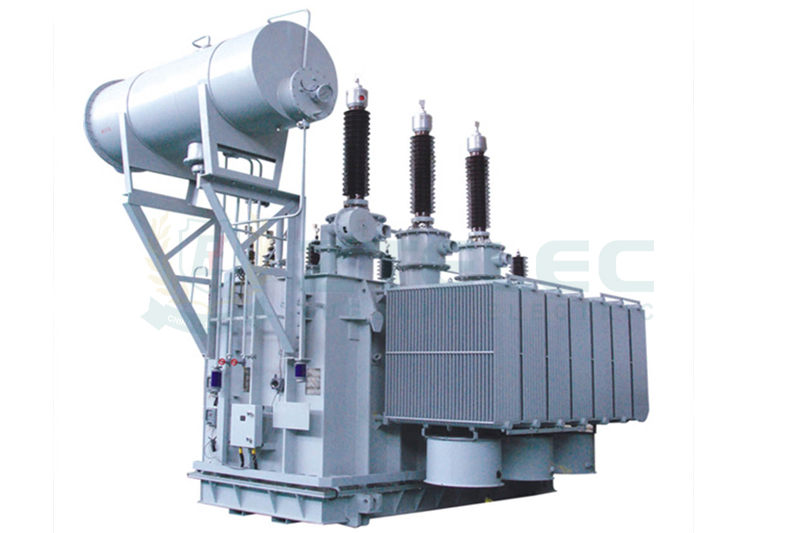
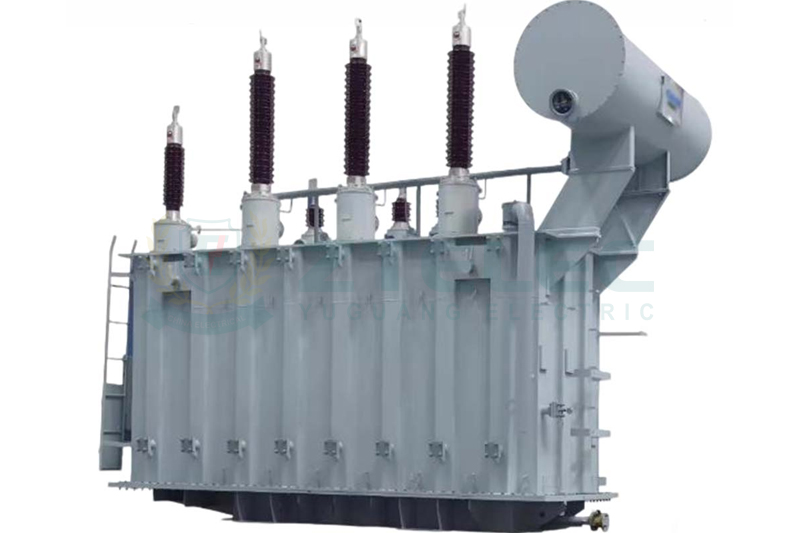
Oil immersed transformers use insulating oil for both electrical insulation and heat dissipation. Compared with dry type transformers, they provide superior cooling performance, higher overload capability, and longer service life under continuous heavy-load operation, making them particularly suitable for industrial parks, manufacturing plants, mining operations, utility substations, and large infrastructure projects.
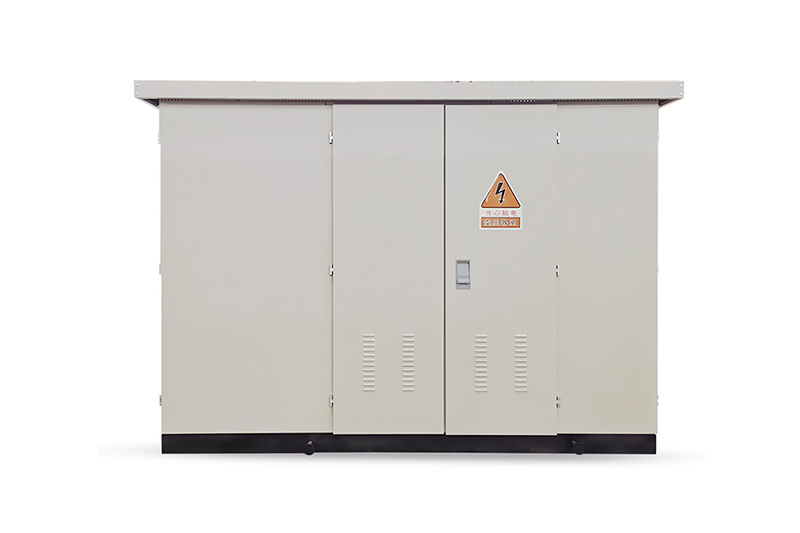
In addition, oil immersed transformers generally cost 15% to 25% less than equivalent dry type transformers, making them an economical choice for outdoor substations and prefabricated transformer stations.
Understanding Transformer Energy Losses: No-Load Loss vs. Load Loss
No-Load Loss Determines Long-Term Energy Consumption
No-load loss, also known as core loss, is the energy consumed when the transformer is energized but carries no load. It mainly results from hysteresis and eddy current losses in the transformer core. Since distribution transformers remain energized around the clock, no-load loss occurs continuously throughout the year and represents a significant portion of lifetime operating expenses.
For a typical 1500 kVA oil immersed transformer, standard models usually have no-load losses between 1.7 and 2.0 kW. High-efficiency models such as S13 and S15 transformers reduce no-load losses to approximately 1.1 to 1.4 kW. Transformers equipped with amorphous alloy cores can reduce no-load losses by more than 60%, making them one of the most energy-efficient options available.
For industrial parks operating below 60% average loading, reducing no-load loss often delivers greater long-term energy savings than reducing load loss, making high-efficiency transformers an excellent investment.
Load Loss Affects Operating Efficiency Under Heavy Loads
Load loss, commonly referred to as copper loss, is generated by electrical resistance in the transformer windings and increases proportionally to the square of the load current.
A fully loaded 1500 kVA oil immersed transformer typically has load losses ranging from 10 to 17 kW, depending on conductor material, conductor size, and winding design.
Copper windings generally produce 8% to 12% lower load losses than aluminum windings while also providing greater mechanical strength and higher short-circuit withstand capability. They are therefore recommended for continuous heavy-duty industrial applications and mission-critical facilities.
Where electrical demand fluctuates significantly, transformer capacity should be selected according to the site’s annual load profile so that average loading remains within the optimal 50% to 80% operating range for maximum efficiency.
Understanding Transformer Energy Efficiency Standards
Energy-efficient distribution transformers are increasingly required worldwide. While China follows GB 20052-2020, international projects generally specify transformers designed in accordance with IEC 60076 and local minimum energy performance requirements.
Premium efficiency transformers feature lower core and load losses through the use of high-grade grain-oriented silicon steel or amorphous alloy cores, making them suitable for data centers, critical industrial facilities, green buildings, and renewable energy projects.
Medium-efficiency models offer an excellent balance between purchase cost and operating performance and remain the preferred option for most industrial park applications.
For projects expected to operate for more than ten years, selecting a higher-efficiency transformer typically delivers the lowest life cycle cost. Although the initial investment is higher, electricity savings often recover the additional cost within three to six years, followed by decades of reduced operating expenses.

Key Factors When Selecting a 1500 kVA Oil Immersed Transformer
Select the Right Capacity
An oversized transformer operates under light-load conditions, increasing the proportion of no-load losses. Conversely, an undersized transformer may operate continuously near overload, accelerating insulation aging and shortening service life.
Capacity selection should consider current demand, projected load growth over the next three to five years, and contingency capacity to maintain optimal operating efficiency.
Copper or Aluminum Windings?
Copper windings offer superior conductivity, lower losses, higher mechanical strength, and greater long-term reliability, making them the preferred solution for high-load industrial applications.
Aluminum windings provide lower initial investment and reduced weight, making them suitable for projects with stable loading and tighter budget constraints.
Mineral Oil or Natural Ester Insulating Fluid?
Mineral insulating oil remains the industry’s standard because of its proven performance, widespread availability, and lower purchase cost.
Natural ester insulating fluids are becoming increasingly popular in environmentally sensitive industrial parks because they offer a much higher fire point, improved biodegradability, and enhanced environmental performance. However, transformers filled with natural ester fluid typically cost 10% to 20% more than conventional mineral oil models.
Industrial parks located near residential areas, commercial districts, or environmentally protected zones increasingly specify natural ester transformers to improve fire safety and sustainability.
Installation Environment and Protection Requirements
Outdoor installations should include weather-resistant, corrosion-resistant, and UV-resistant enclosures with a recommended protection rating of at least IP33, together with appropriate lightning protection and grounding systems.
Indoor substations should provide sufficient ventilation, cooling airflow, maintenance access, and fire separation distances while complying with applicable electrical and building regulations.
Noise Control Matters
Where substations are located near office buildings, laboratories, or employee facilities, transformer noise should be carefully considered.
A standard 1500 kVA oil immersed transformer typically operates between 60 and 68 dB. Optimized core clamping structures, improved tank design, and vibration isolation technologies can reduce operating noise by 3 to 5 dB, creating a quieter working environment.
Evaluate Total Cost of Ownership (TCO), Not Just Purchase Price
Transformer procurement should be based on the complete life cycle cost rather than equipment price alone.
Total Cost of Ownership includes equipment purchase, transportation, installation, substation construction, electrical losses throughout the service life, routine maintenance, oil testing, insulation testing, oil filtration, spare parts, and end-of-life recycling or disposal.
Over a typical 20-year operating period, a high-efficiency 1500 kVA transformer may cost only modestly more at the time of purchase but can reduce electricity costs by tens of thousands of dollars through lower no-load losses, providing a substantially higher return on investment than lower-efficiency alternatives.
Technical Specifications Buyers Should Confirm Before Purchasing
Procurement teams should request complete technical documentation, including rated power, primary and secondary voltages, frequency, vector group, impedance voltage, energy efficiency level, winding material, insulating fluid type, cooling method, enclosure protection rating, and temperature rise.
Suppliers should also provide type test reports, routine factory test reports, third-party certification, quality management certificates, warranty terms, spare parts availability, and long-term technical support to ensure reliable operation throughout the transformer’s service life.
The 1500 kVA oil immersed transformer is one of the most important assets within an industrial park’s electrical distribution system. Its selection directly influences energy consumption, operational reliability, maintenance costs, and long-term return on investment.
Rather than focusing solely on the initial purchase price, project owners should evaluate transformer efficiency, no-load and load losses, winding material, insulating fluid, installation conditions, and Total Cost of Ownership. Selecting a transformer manufactured with proven engineering, high-quality materials, and advanced production processes will deliver safer, more reliable, and more energy-efficient power distribution throughout the project’s entire operating life.