315 kVA Cast Resin Dry-Type Transformer: Applications, Benefits & Selection Guide
Time:2026-08-11 Auther:ZTelec-www.ztelectransformer.com
The 315 kVA cast resin dry-type transformer is a widely used power distribution solution for industrial plants, commercial buildings, infrastructure projects, renewable energy systems, and other applications where electrical safety, reliability, and low maintenance are important.
Unlike oil-filled transformers, a cast resin dry-type transformer uses a solid insulation system, typically based on epoxy resin, rather than liquid transformer oil. The absence of insulating oil eliminates oil leakage and reduces certain fire and environmental risks, making cast resin transformers particularly suitable for indoor electrical rooms, commercial buildings, hospitals, data centers, and industrial facilities.
With a rated capacity of 315 kVA, this transformer can be configured with different primary and secondary voltage ratings, insulation levels, vector groups, impedance values, enclosure types, and cooling arrangements to meet specific power distribution requirements.
This guide explains the construction, advantages, applications, cooling methods, maintenance requirements, and key selection factors of a 315 kVA cast resin dry-type transformer.

What Is a 315 kVA Cast Resin Dry-Type Transformer?
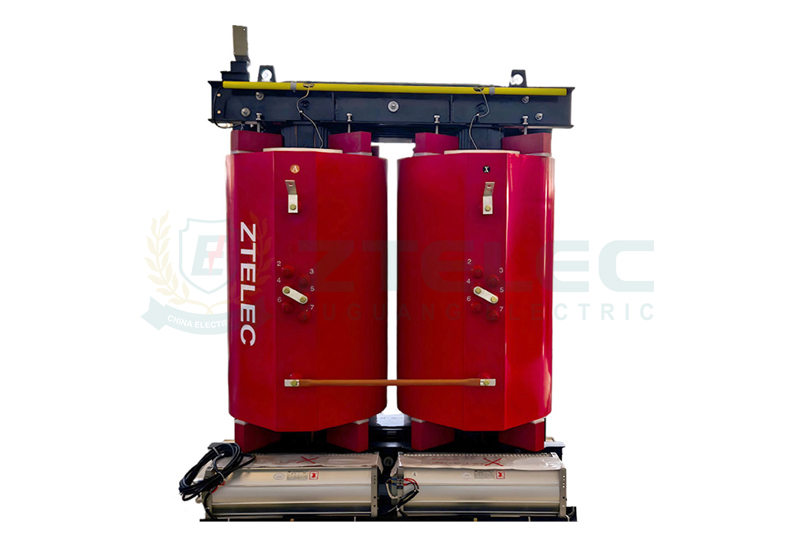
A 315 kVA cast resin dry-type transformer is a dry-type electrical transformer with a rated apparent power of 315 kVA. Its windings are encapsulated or cast with epoxy resin to provide electrical insulation and mechanical protection.
The transformer transfers electrical energy between circuits through electromagnetic induction while using air as the primary cooling medium. Depending on the design, the transformer can operate with natural air cooling or forced air cooling.
The 315 kVA capacity is commonly used for medium-sized electrical loads. Typical applications include industrial workshops, commercial buildings, schools, hospitals, data centers, renewable energy systems, and infrastructure facilities.
Main Components of a 315 kVA Cast Resin Transformer
Cast Resin Windings: The high-voltage and low-voltage windings are encapsulated or cast with epoxy resin. This insulation system provides dielectric strength, mechanical protection, and resistance to environmental influences.
Magnetic Core: The transformer core is generally manufactured from laminated electrical steel to provide an efficient magnetic circuit while limiting core losses.
Epoxy Resin Insulation: Epoxy resin surrounds and protects the windings. Its electrical and mechanical properties make it suitable for dry-type transformer insulation systems.
Cooling System: Most 315 kVA cast resin transformers use AN cooling, or Air Natural cooling. Where additional thermal capacity is required, AF cooling, or Air Forced cooling, can be incorporated.
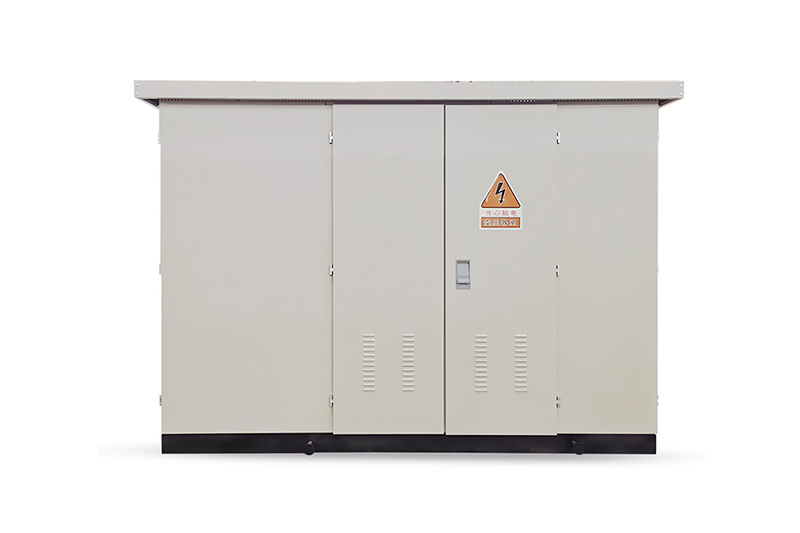
Transformer Enclosure: Depending on the installation environment, the transformer may be supplied with a ventilated enclosure or a protected enclosure designed for specific indoor or outdoor conditions.
Temperature Monitoring: Temperature sensors and winding temperature controllers can be installed to monitor operating conditions and provide alarm or protection functions.
Key Benefits of a 315 kVA Cast Resin Dry-Type Transformer
1. Improved Fire Safety
One of the major advantages of a 315 kVA cast resin dry-type transformer is that it does not use conventional mineral transformer oil for insulation and cooling.
This eliminates the risks associated with oil leakage and significantly reduces the fire load compared with oil-filled transformer installations. For this reason, cast resin transformers are often considered for indoor electrical rooms, commercial buildings, hospitals, underground facilities, and other locations where fire safety is an important design consideration.
However, a dry-type transformer is not completely immune to fire or overheating. Proper electrical protection, ventilation, installation clearances, temperature monitoring, and compliance with applicable fire and electrical standards remain essential.
2. No Transformer Oil Maintenance
Because a cast resin transformer does not rely on liquid insulating oil, it does not require routine transformer oil sampling, filtration, or oil replacement.
This can simplify maintenance procedures and eliminate several oil-related maintenance tasks. Routine maintenance generally focuses on cleaning, ventilation, electrical connections, temperature monitoring, insulation condition, and mechanical inspection.
3. Suitable for Indoor Installation
The compact and oil-free design of a cast resin dry-type transformer makes it suitable for many indoor electrical installations.
Typical locations include commercial buildings, factories, hospitals, schools, data centers, transportation facilities, underground electrical rooms, and industrial plants.
When an enclosure and environmental protection are properly specified, dry-type transformers can also be adapted for certain outdoor applications.
4. Strong Mechanical and Electrical Insulation
The epoxy resin insulation system provides mechanical support around the windings while maintaining electrical insulation between conductive components.
This can help protect the winding structure against mechanical stress, moisture, dust, and other environmental influences. The actual performance depends on the resin formulation, manufacturing process, winding design, insulation system, and applicable testing requirements.
5. Efficient Power Distribution
A properly designed 315 kVA cast resin transformer can provide efficient power conversion with controlled no-load and load losses.
Transformer efficiency depends on several factors, including core material, winding conductor, magnetic flux density, winding resistance, load profile, temperature rise, and cooling configuration. Therefore, buyers should compare the manufacturer’s guaranteed loss values rather than relying only on general efficiency claims.
6. Flexible Voltage Configuration
The 315 kVA rating can be combined with different primary and secondary voltage levels to meet regional grid requirements.
Common medium-voltage configurations may include 6 kV, 10 kV, 11 kV, 20 kV, 22 kV, 33 kV, and 35 kV, while the low-voltage side can be customized according to the distribution system.
Actual voltage ratings should always be selected according to the local utility network and project specifications.
7. Compact and Low-Maintenance Design
Compared with many oil-filled installations, a cast resin transformer can simplify the overall electrical room design because there is no need for transformer oil containment and related oil-handling equipment.
Its low-maintenance characteristics can be particularly valuable in commercial facilities, industrial plants, and infrastructure projects where minimizing maintenance interruptions is important.
315 kVA Cast Resin Dry-Type Transformer Applications
1. Industrial Manufacturing Plants
Industrial facilities require reliable electrical distribution for motors, production lines, automation systems, pumps, compressors, HVAC equipment, and other electrical loads.
A 315 kVA dry-type transformer can be used to step down medium voltage to low voltage for local industrial distribution.
Typical applications include automotive plants, machinery factories, metal processing facilities, food processing plants, pharmaceutical factories, and general manufacturing facilities.
2. Commercial Buildings
Commercial buildings require stable power for lighting, HVAC systems, elevators, fire protection equipment, communications, security systems, and other building services.
Cast resin transformers are often suitable for commercial electrical rooms because they do not contain liquid insulating oil and can be installed close to electrical loads when permitted by local regulations and the transformer enclosure design.
3. Data Centers
Data centers require carefully engineered electrical distribution systems to support servers, cooling equipment, UPS systems, networking equipment, and auxiliary loads.
A 315 kVA cast resin transformer may be used as part of a data center’s medium-voltage to low-voltage distribution system. Selection should consider redundancy, harmonic content, load profile, temperature rise, noise, short-circuit withstand capability, and monitoring requirements.
4. Hospitals and Healthcare Facilities
Hospitals require reliable electrical power for medical equipment, operating rooms, HVAC systems, lighting, emergency systems, and other critical loads.
Dry-type transformers can be considered for hospital electrical rooms where oil-free equipment and fire-safety characteristics are important. The final design must comply with applicable healthcare electrical standards and local regulations.
5. Solar Power Systems
Cast resin transformers can be used in solar photovoltaic power systems for voltage conversion between inverter systems and medium-voltage collection networks.
For renewable energy applications, transformer selection should consider inverter characteristics, harmonics, load variation, ambient temperature, cooling requirements, insulation level, and expected operating cycles.
6. Wind Energy Projects
Wind power facilities require transformers to connect generator output to collection systems and grid infrastructure.
Dry-type transformers can be used in selected wind power applications where fire safety, environmental conditions, compact design, and maintenance requirements influence equipment selection.
7. Railway and Transportation Infrastructure
Railway stations, metro systems, airports, tunnels, and other transportation facilities require reliable electrical distribution.
A 315 kVA cast resin transformer can support auxiliary loads such as lighting, ventilation, communications, signaling, station equipment, and building services, depending on the system architecture.
8. Mining and Industrial Infrastructure
Mining operations often require electrical equipment that can operate under demanding environmental conditions. Dry-type transformers may be used in appropriate mining applications where the installation environment, enclosure protection, ventilation, and applicable hazardous-area requirements are properly addressed.
315 kVA Cast Resin Transformer vs. Oil-Filled Transformer
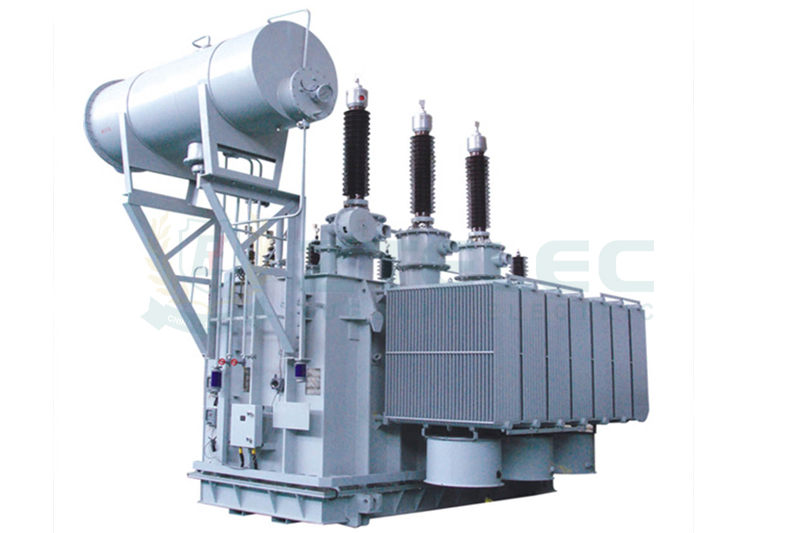
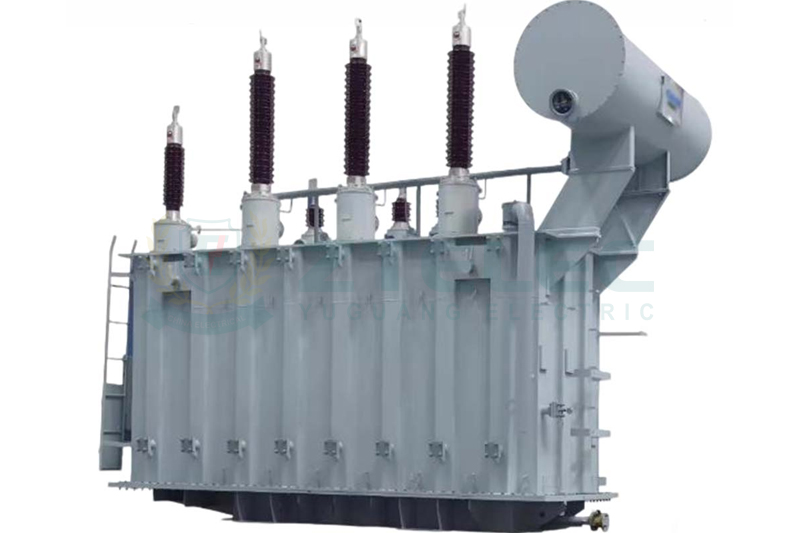
Both cast resin dry-type transformers and oil-filled transformers are widely used in electrical power distribution. The appropriate choice depends on the project environment, capacity, installation location, fire-safety requirements, cost, maintenance strategy, and technical specifications.
| Feature | 315 kVA Cast Resin Dry-Type Transformer | Oil-Filled Transformer |
|---|---|---|
| Insulation | Solid epoxy resin and other dry insulation materials | Liquid insulating oil and solid insulation |
| Oil Leakage | No insulating oil | Requires measures to manage potential oil leakage |
| Fire Characteristics | No mineral oil fire load | Oil properties must be considered in fire protection design |
| Oil Maintenance | Not required | Oil testing and condition monitoring may be required |
| Indoor Installation | Well suited to many indoor applications | Requires appropriate fire and oil containment considerations |
| Cooling Medium | Air | Transformer oil and air |
| Maintenance | Generally low maintenance | Requires additional oil-related maintenance |
| Noise | Can require acoustic consideration | Often quieter depending on design |
| Typical Applications | Buildings, factories, hospitals, data centers, infrastructure | Utility substations, outdoor distribution, industrial applications |
Why Choose a 315 kVA Cast Resin Transformer?
A 315 kVA cast resin transformer is particularly attractive when the project requires an oil-free transformer with low maintenance requirements and good fire-safety characteristics.
It can be a strong choice for indoor electrical rooms, commercial buildings, industrial facilities, hospitals, data centers, renewable energy projects, and transportation infrastructure.
However, oil-filled transformers can still offer advantages in certain applications, particularly where higher capacities, outdoor installation, specific cooling requirements, or cost considerations make oil-immersed technology more suitable.
The best transformer should therefore be selected according to the complete project specification rather than transformer type alone.
Cooling Methods for 315 kVA Cast Resin Dry-Type Transformers
AN Cooling: Air Natural
AN cooling uses natural air circulation to remove heat from the transformer windings and core. This is a common cooling arrangement for cast resin dry-type transformers.
AN cooling provides a simple and reliable cooling system without requiring fans or additional auxiliary equipment.
AF Cooling: Air Forced
AF cooling uses fans to increase airflow through the transformer. This can improve heat dissipation and may allow increased transformer loading within the manufacturer’s specified limits.
AF cooling should be used according to the manufacturer’s rated capacity and thermal design. Additional cooling does not automatically mean that a transformer can sustain unlimited overload operation.

Important Technical Parameters of a 315 kVA Dry-Type Transformer
When requesting a quotation for a 315 kVA cast resin dry-type transformer, buyers should provide detailed electrical and environmental specifications.
| Parameter | Typical Requirement |
|---|---|
| Rated Capacity | 315 kVA |
| Transformer Type | Cast Resin Dry-Type |
| Cooling Method | AN or AN/AF |
| Frequency | 50 Hz or 60 Hz |
| Primary Voltage | Customized according to grid requirements |
| Secondary Voltage | Customized according to load requirements |
| Phase | Three-phase for most industrial applications |
| Insulation System | Epoxy resin cast insulation |
| Installation | Indoor or outdoor depending on enclosure design |
| Vector Group | Specified according to system requirements |
| Impedance | Specified according to system design |
| Temperature Monitoring | Optional or specified according to application |
The final technical parameters should always be confirmed by the transformer manufacturer based on the project voltage, load characteristics, applicable standards, environmental conditions, and required performance.
How to Choose the Right 315 kVA Cast Resin Dry-Type Transformer
1. Confirm the Power Requirement
The 315 kVA rating should be compared with the calculated maximum demand of the electrical system. Future load growth should also be considered when determining whether 315 kVA provides sufficient capacity.
2. Select the Correct Voltage Ratio
The primary voltage must match the incoming medium-voltage network, while the secondary voltage must match the downstream distribution system.
For example, a project may require a 10kV to 0.4kV 315 kVA dry-type transformer, while another project may require 11kV, 20kV, or 33kV on the primary side.
3. Determine the Cooling Method
AN cooling is suitable for many standard applications. AF cooling can be considered when additional heat dissipation is required, subject to the manufacturer’s design and rating.
4. Evaluate the Installation Environment
Consider ambient temperature, altitude, humidity, dust, corrosive gases, ventilation, indoor or outdoor installation, seismic conditions, and enclosure protection.
High-altitude installations may require special consideration because reduced air density can affect cooling performance.
5. Consider Harmonic Loads
Modern electrical systems may contain nonlinear loads such as variable frequency drives, UPS systems, rectifiers, inverters, LED lighting, and data center equipment.
Where harmonic distortion is significant, the transformer design should be evaluated for additional heating and appropriate derating or harmonic-duty requirements.
6. Check Noise Requirements
Dry-type transformers can produce audible noise due to magnetostriction and electromagnetic forces. For hospitals, offices, residential buildings, and other noise-sensitive environments, buyers should specify the required sound level and consider suitable installation measures.
7. Review Applicable Standards
Depending on the target market, the transformer may need to comply with standards such as the IEC 60076 series, including requirements applicable to dry-type transformers, as well as relevant national standards and utility specifications.
8. Evaluate Manufacturer Testing and Quality Control
Before purchasing a 315 kVA cast resin transformer, buyers should review the manufacturer’s quality control procedures, production capabilities, testing facilities, certifications, routine test reports, type test documentation where applicable, and previous project experience.
Maintenance of a 315 kVA Cast Resin Dry-Type Transformer
One of the advantages of dry-type transformers is that they do not require transformer oil maintenance. However, regular inspection is still necessary to maintain reliable operation.
Cleaning
Dust accumulation on windings, ventilation openings, and cooling surfaces can reduce heat dissipation. Cleaning should be performed according to the manufacturer’s maintenance recommendations and the environmental conditions of the installation.
Electrical Connection Inspection
Terminal connections, busbars, cable connections, grounding systems, and mechanical fasteners should be inspected periodically to identify loose connections or signs of overheating.
Temperature Monitoring
Temperature sensors and monitoring devices should be checked to ensure that alarms and protection functions operate correctly.
Ventilation Inspection
For AN and AF cooling systems, ventilation openings should remain unobstructed. Fan systems should be inspected where forced-air cooling is installed.
Insulation Inspection
The condition of the cast resin surface and insulation system should be monitored for signs of cracking, contamination, tracking, or abnormal deterioration.
Future Trends in Cast Resin Dry-Type Transformers
Smart Transformer Monitoring
Digital sensors and intelligent monitoring systems are increasingly being integrated into dry-type transformers. These systems can monitor winding temperature, load conditions, operating status, and other parameters.
Connected monitoring systems can provide operators with real-time data and support condition-based maintenance strategies.
Higher Energy Efficiency
Transformer manufacturers continue to improve core materials, winding design, magnetic flux optimization, and manufacturing processes to reduce no-load and load losses.
Energy efficiency is becoming increasingly important as electricity prices rise and industrial users focus more heavily on total cost of ownership.
Improved Thermal Management
Advanced winding designs, improved ventilation, optimized resin systems, and intelligent fan control can improve the thermal performance of dry-type transformers.
Renewable Energy Integration
Cast resin transformers are increasingly being considered for solar photovoltaic systems, wind power installations, battery energy storage systems, and other distributed energy applications.
Future transformer designs will increasingly focus on variable loading, power electronic harmonics, digital monitoring, and integration with intelligent energy management systems.
Challenges and Considerations
Higher Initial Purchase Cost
Cast resin dry-type transformers can have a higher initial purchase price than some conventional oil-filled transformers. However, the total cost of ownership should also consider maintenance, installation, fire protection, environmental requirements, and operating losses.
Thermal Management
Because dry-type transformers use air for cooling, adequate ventilation is important. A poorly ventilated electrical room can result in higher ambient temperatures and reduced transformer performance.
Noise
Noise can be an important consideration for indoor applications. Where the transformer is installed near offices, residential areas, hospitals, or other noise-sensitive spaces, the required sound level should be specified during the design stage.
Environmental Conditions
Although cast resin provides strong insulation protection, the transformer still needs to be properly designed for humidity, dust, corrosive environments, altitude, temperature, and other site conditions.
315 kVA Cast Resin Dry-Type Transformer Manufacturer
Choosing an experienced 315 kVA cast resin dry-type transformer manufacturer is important for achieving reliable long-term performance.
A qualified manufacturer should be able to customize the transformer according to voltage ratio, frequency, vector group, impedance, insulation level, cooling method, enclosure protection, temperature monitoring, installation environment, and applicable standards.
Buyers should also request technical documentation covering rated capacity, no-load losses, load losses, temperature rise, insulation level, dimensions, weight, sound level, short-circuit withstand capability, and routine test results.
For export projects, manufacturers should also be able to provide appropriate packaging, transportation support, technical documentation, testing certificates, installation instructions, and after-sales service.
The 315 kVA cast resin dry-type transformer is a reliable and flexible solution for modern electrical power distribution. Its oil-free insulation system, low maintenance requirements, good fire-safety characteristics, compact design, and flexible voltage configuration make it suitable for industrial, commercial, infrastructure, renewable energy, and indoor electrical applications.
When compared with oil-filled transformers, cast resin dry-type transformers can provide important advantages where oil-free operation, indoor installation, simplified maintenance, and fire-safety considerations are priorities. However, transformer selection should always be based on the complete electrical and environmental requirements of the project.
Before purchasing a 315 kVA dry-type transformer, buyers should evaluate rated voltage, transformer losses, cooling method, insulation level, vector group, impedance, harmonic loading, installation conditions, noise requirements, applicable standards, protection systems, and manufacturer testing capabilities.
With continued development in smart monitoring, energy-efficient core materials, thermal management, and renewable energy integration, the 315 kVA cast resin transformer will remain an important option for safe and efficient medium-voltage power distribution.