Oil-Immersed Transformer Capacity Selection: Balancing Energy Efficiency and Performance
Time:2025-12-11 Auther:ZTelec-www.ztelectransformer.com
Oil-immersed transformers play a critical role in power systems as essential equipment for energy conversion and distribution. Their capacity selection directly influences grid operation stability, energy efficiency, long-term service life, and total cost of ownership.
Choosing insufficient capacity may lead to overload and accelerated insulation aging, while excessive capacity results in higher investment and increased no-load losses.
A scientifically designed capacity selection plan is essential to achieve both reliability and economic operation.
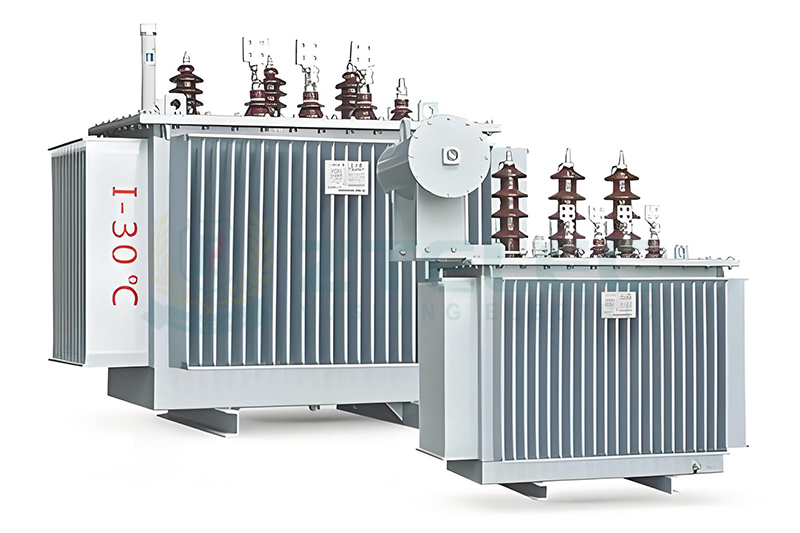
Importance of Capacity Selection for Oil-Immersed Transformers
A properly selected transformer capacity improves operational reliability and reduces energy consumption. Four main factors reflect its importance:
No-load loss: No-load loss (P₀) increases with transformer capacity, causing higher energy consumption during low-load periods.
Load loss: Load loss (Pₖ) is proportional to the square of load current. Undersized transformers cause significantly higher load loss.
Service life: Continuous overload accelerates insulation aging and increases the probability of transformer failure.
Energy efficiency compliance: Transformers must meet energy efficiency standards such as GB and IEC to reduce lifecycle energy consumption.
A reasonable capacity selection achieves an optimal balance between transformer performance and energy-saving requirements.
How to Balance Energy Efficiency and Performance in Oil-Immersed Transformers
1. Accurate Load Calculation
Capacity selection begins with accurate load estimation. Calculate the total equipment load in kW, apply the demand factor and power factor to determine the calculated load in kVA, and consider load growth for the next 5–10 years.
For industrial and commercial long-term continuous loads, the recommended load rate is 60%–75%. This ensures sufficient short-term overload capability while keeping the transformer operating within its high-efficiency zone.
2. Selecting a High-Efficiency Transformer
Transformers should meet or exceed GB 20052 standards. Efficiency grades and material types are key considerations:
Energy Efficiency Levels:
Level 3: Entry-level, minimum market standard.
Level 2: Best balance of cost and efficiency, widely used and recommended.
Level 1: Uses advanced amorphous alloy materials with extremely low no-load loss but higher initial cost.
Transformer Types:
S13/S14 silicon-steel transformers offer mature technology and cost-efficiency and are suitable for Level 2 and Level 1 applications.
SH15 amorphous alloy transformers reduce no-load loss by 60–80% compared to silicon-steel models. They are ideal for low or fluctuating load scenarios and may offer lower lifetime cost despite a higher purchase price.
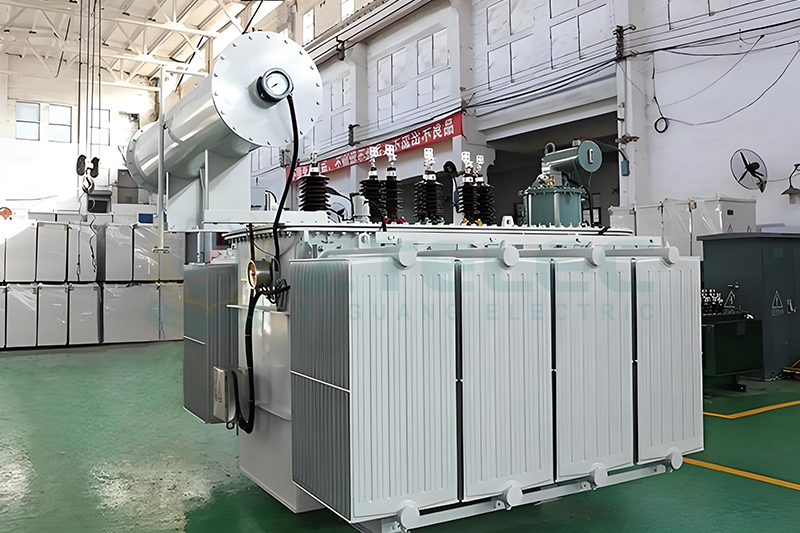
3. Analyzing the Load Curve
Different load characteristics affect transformer selection:
Stable Load: Continuous factories benefit from silicon-steel transformers operating efficiently at 65% load.
Fluctuating Load: Shopping malls, office buildings, and commercial complexes with low average loading benefit from amorphous alloy transformers to minimize no-load loss.
4. Parallel Operation of Multiple Transformers
Parallel operation can significantly enhance both energy efficiency and supply reliability.
Single Transformer: Simple and low cost but inefficient at low load and requires complete power shutdown during maintenance.
Parallel Transformers: Ideal for facilities with large or highly variable loads, such as data centers or hospitals.
Advantages of parallel operation:
Energy efficiency improves by operating one transformer during off-peak hours and multiple units during peak demand.
Supply reliability increases, as remaining units can temporarily support essential loads during maintenance or fault conditions.
5. Balancing Performance with Reliability Requirements
Transformer overload capability, short-circuit withstand strength, and voltage regulation requirements must all be considered.
Oil-immersed transformers can typically operate at 1.3 times rated load for two hours, but capacity should not be oversized simply to cover rare peak demands.
If precise voltage regulation is required, especially in unstable grid conditions, on-load tap changers (OLTC) may be selected for continuous voltage adjustment.
Through scientific load analysis, energy-efficiency evaluation, and proper configuration, enterprises can significantly reduce energy consumption, extend transformer service life, and optimize operational cost.
Balancing performance and energy efficiency is essential for power systems, industrial facilities, commercial buildings, and renewable energy stations.
Selecting the right oil-immersed transformer capacity is not only an engineering decision but a strategic choice for long-term operational excellence.