Prefabricated Substation Supplier: 630kVA to 2500kVA Solutions with Fast Delivery and IEC Compliance
Time:2026-05-21 Auther:ZTelec-www.ztelectransformer.com
As global energy infrastructure upgrades accelerate alongside the expansion of data centers and renewable energy projects, prefabricated substations are increasingly replacing conventional civil-built substations as a modern power distribution solution. Compared with traditional on-site construction methods, prefabricated substations offer shorter installation time, higher manufacturing consistency, reduced footprint, and easier maintenance, making them widely used in industrial parks, solar plants, wind farms, rail transit systems, mining operations, and data centers.
For EPC contractors, power engineering companies, and project owners, choosing a prefabricated substation supplier capable of providing a complete capacity range from 630kVA to 2500kVA, while meeting IEC international standards and supporting fast delivery, is critical to project schedule, operational reliability, and long-term lifecycle cost control.
This article provides a comprehensive overview of prefabricated substation technologies, common capacity applications, IEC standards, fast delivery strategies, and supplier evaluation criteria to help engineers and procurement teams make more informed purchasing decisions.

What Is a Prefabricated Substation and Why Is Demand Growing Rapidly?
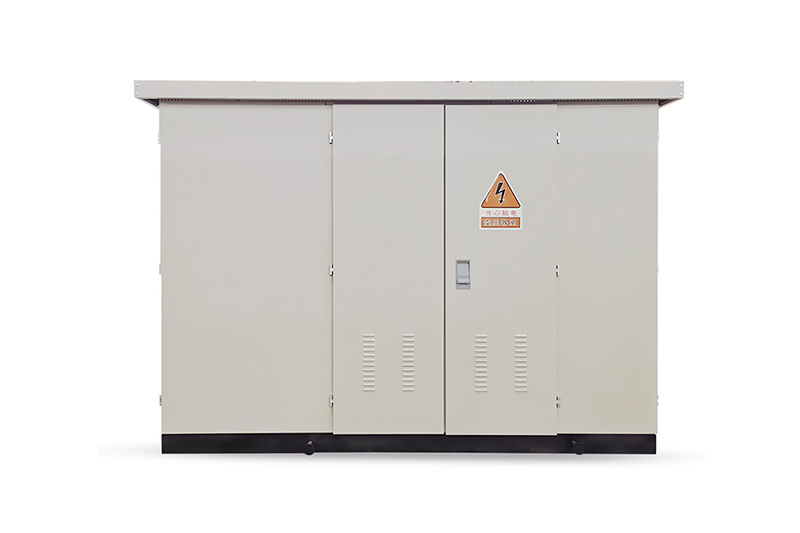
A prefabricated substation, also known as a compact substation or package substation, is an integrated power distribution system that combines medium-voltage switchgear, power transformers, low-voltage panels, and auxiliary control systems within a metal or concrete enclosure.
Unlike conventional substations that require extensive on-site construction, prefabricated substations are largely manufactured and assembled in factory environments. On-site work is typically limited to foundation preparation, equipment placement, and cable connection, significantly reducing project timelines.
Global demand for prefabricated substations continues to increase due to several key market drivers.
First, the rapid expansion of renewable energy projects has created strong demand for fast grid connection solutions. Solar and wind power projects are often located in remote areas where construction speed and deployment flexibility are essential.
Second, the growth of data centers, transportation infrastructure, and smart industrial facilities has increased the need for modular, scalable, and highly reliable power distribution systems.
In addition, rising labor costs worldwide have made traditional field construction more expensive and time-consuming. Prefabricated substations can reduce on-site construction work by more than 70% while improving quality consistency through factory-controlled production.
Typical Applications for 630kVA to 2500kVA Prefabricated Substations
630kVA to 800kVA
The 630kVA to 800kVA range represents one of the most commonly used capacity segments in the market. These substations are widely applied in residential developments, commercial buildings, small industrial plants, and distributed solar projects.
Because of high market demand, many suppliers maintain standardized inventory for this capacity range, enabling delivery within 4 to 6 weeks for fast-track projects.
1000kVA to 1250kVA
This capacity range is commonly used in medium-sized industrial parks, logistics centers, hospitals, schools, and public infrastructure projects.
Most transformers in this segment adopt Dyn11 vector group configurations, which effectively reduce third harmonic distortion and improve compatibility with nonlinear industrial loads.
1600kVA to 2000kVA
Prefabricated substations rated from 1600kVA to 2000kVA are widely used in large industrial facilities, commercial complexes, data center E-house systems, and renewable energy collection substations.
Due to the higher power density, these systems require more advanced cooling designs, stronger short-circuit withstand capability, and optimized internal layout structures.
2500kVA
The 2500kVA class is commonly regarded as the mainstream high-capacity solution for prefabricated substations. It is extensively used in hyperscale data centers, utility grid upgrades, mining projects, and petrochemical facilities.
Such applications often require higher enclosure protection ratings, typically IP54 or above, as well as explosion-proof certifications such as ATEX or IECEx for hazardous environments.
IEC Standards: The Core Requirement for Supplier Qualification
Compliance with IEC international standards is essential for prefabricated substations entering markets such as Europe, the Middle East, Southeast Asia, and Africa. Buyers should pay particular attention to the following standards when evaluating suppliers.
IEC 62271-202: Core Standard for Prefabricated Substations
IEC 62271-202 is the primary international standard governing high-voltage/low-voltage prefabricated substations. It covers design, manufacturing, type testing, routine testing, and site commissioning requirements.
The standard focuses on critical parameters including internal arc classification (IAC), temperature rise performance, enclosure protection level (IP rating), and mechanical strength.
IEC 60076: Power Transformer Standards
The IEC 60076 series defines transformer losses, insulation levels, short-circuit withstand capability, and temperature rise requirements.
Buyers should carefully review no-load loss (P0) and load loss (Pk) values because these parameters directly affect long-term operating expenses throughout the project lifecycle.
IEC 62271-200: Medium-Voltage Switchgear Standards
This standard applies to medium-voltage switchgear and ring main units (RMU) installed inside prefabricated substations, covering rated voltage, rated current, short-time withstand current, and internal fault classification.
IEC 61439: Low-Voltage Switchgear Standards
IEC 61439 specifies design verification and routine testing requirements for low-voltage distribution panels to ensure long-term operational safety and reliability.
It is recommended to prioritize suppliers capable of providing third-party certified type test reports from organizations such as TÜV, SGS, DNV, or Intertek instead of relying solely on internal factory testing documents.
Fast Delivery Capability: A Critical Competitive Advantage
Fast delivery is one of the biggest advantages of prefabricated substations compared with conventional civil-built substations. However, supplier capabilities can vary significantly.
Leading manufacturers typically maintain standardized inventory for common ratings such as 630kVA, 1000kVA, 1600kVA, 2000kVA, and 2500kVA, including transformers, medium-voltage switchgear, and low-voltage panel assemblies.
Through modular design and pre-engineered inventory systems, lead times can often be reduced from 16–20 weeks to approximately 6–10 weeks.
Advanced manufacturing facilities also implement parallel production processes, allowing enclosure fabrication, transformer assembly, MV switchgear production, and LV system integration to proceed simultaneously.
Before shipment, substations typically undergo comprehensive Factory Acceptance Testing (FAT), including insulation testing, functional verification, interlock testing, and protection system checks, minimizing on-site commissioning time.
Experienced suppliers also optimize transportation dimensions, lifting arrangements, and installation layouts during the design stage to reduce logistics risks and simplify field installation.

How to Evaluate a Prefabricated Substation Supplier
Complete Capacity Coverage
Choosing a supplier capable of providing a full product range from 630kVA to 2500kVA helps avoid coordination issues associated with sourcing from multiple vendors.
Valid IEC Type Test Certifications
Buyers should carefully verify certification dates, testing authority qualifications, and whether the tested parameters match actual project requirements.
Engineering Customization Capability
Different projects require different technical adaptations, including high-altitude derating, anti-corrosion coatings, sandstorm protection, salt spray resistance, and explosion-proof designs.
Manufacturing and Quality Control System
It is important to evaluate factory production capacity, in-house manufacturing capability for critical components, and ISO 9001 quality management compliance.
Delivery Performance and Contract Reliability
Suppliers should provide historical on-time delivery performance data, and contracts should clearly define liquidated damages clauses for delayed delivery.
After-Sales Service and Spare Parts Availability
Since prefabricated substations often operate for more than 25 years, local technical support and long-term spare parts availability are critical considerations.
Project References
Priority should be given to suppliers with proven experience in projects similar to the intended application, such as data centers, renewable energy plants, or industrial facilities.
Supply Chain Stability
Under current global supply chain conditions, stable sourcing of silicon steel, copper conductors, and environmentally friendly insulation materials has become increasingly important.
Total Cost of Ownership (TCO) Analysis for Prefabricated Substations
Many buyers focus only on initial equipment cost during procurement while overlooking long-term operational expenses. In reality, total cost of ownership includes procurement, transportation, installation, operation, maintenance, and future upgrades.
Because prefabricated solutions significantly reduce on-site construction requirements, installation and commissioning costs are typically 30% to 50% lower than traditional substations.
Transformer no-load losses and load losses also contribute substantial electricity expenses over long operating periods. Selecting high-efficiency transformers compliant with IEC 60076 energy efficiency standards can significantly reduce operating costs over a 25-year lifecycle.
In addition, modular structures simplify future expansion, relocation, and equipment upgrades, increasing overall asset value retention.
Recommended Applications by Industry
Solar and wind energy projects typically require high weather resistance, anti-corrosion performance, and protection against sand and salt exposure, making 630kVA to 2500kVA outdoor-rated substations ideal.
Data center E-house applications prioritize dual power supply architecture, rapid switching capability, and low-loss operation, commonly using 1600kVA to 2500kVA configurations.
Urban rail transit projects emphasize compact design, vibration resistance, and long-term operational stability, often adopting 1000kVA to 2000kVA systems.
Mining and oil & gas facilities require explosion-proof certification and strong environmental adaptability for harsh operating conditions.
For industrial park expansion projects and emergency temporary power systems, modularity, plug-and-play capability, and rapid deployment are especially important.
The capacity range from 630kVA to 2500kVA represents far more than simple power scaling. It reflects major differences in structural design, cooling systems, protection strategies, and engineering capability.
A truly competitive prefabricated substation supplier must deliver not only IEC-compliant products but also strong capabilities in fast delivery, engineering customization, after-sales support, and lifecycle service.
For EPC contractors and project owners, it is highly recommended to begin supplier qualification and factory audit processes during the early project stage. Comprehensive evaluation of manufacturing capability and quality systems can effectively reduce project risks before contract signing.